Logo featuring the text "NYC Stone Care" with the "Y" in "NYC" stylized in red. The white background and green border highlight this stone restoration NYC brand’s professional look.

Diamond Abrasive Grinding NYC & Long Island

Your Stone Floors, Completely Flat and Scratch-Free

Uneven tiles, deep scratches, and dull traffic patterns don’t mean you need new floors. Diamond abrasive grinding in NYC & Long Island removes the damaged surface layer and reveals the pristine stone underneath—at a fraction of replacement cost.

Industrial Diamond Grinding Equipment

Heavy-duty planetary grinders with metal and resin-bonded diamond plates flatten surfaces and remove damage consumer tools can't touch.

Wet Process Dust Control

Water runs continuously during grinding to eliminate airborne dust, keeping your space clean and safe throughout the entire process.

Stone-Specific Grit Sequences

Marble needs different treatment than granite or travertine. We match the diamond grit progression to your exact stone type.

Off-Peak Scheduling Available

We work around your schedule, including evenings and weekends, so business operations and daily life continue without major disruption.

Stone Floor Grinding NYC & Long Island

Grinding Removes What Cleaning Can't Fix

When your stone floors have lippage, deep scratches, or dull spots that won’t respond to cleaning or polishing, you’re dealing with damage that goes beyond the surface. Standard maintenance can’t fix it. You need diamond abrasive grinding in NYC & Long Island to actually remove the damaged layer.

This process uses industrial diamond plates to grind away imperfections, flatten uneven tiles, and expose fresh stone underneath. It works on marble, granite, travertine, limestone, and terrazzo. The technique is precise—we’re typically removing a layer thinner than a credit card, just enough to get past the damage without compromising the stone’s integrity.

For property owners dealing with worn lobbies, scratched kitchen floors, or uneven bathroom tiles, this is how you restore the surface without the cost and disruption of full replacement. You get a completely flat, uniform finish that looks factory-new.

Marble Floor Grinding NYC & Long Island

The Results You'll See Immediately

Professional stone floor grinding in NYC & Long Island doesn't just make your floors look better. It solves the underlying problems that made them look bad in the first place.

Lippage disappears completely, giving you a flat surface with no raised edges where dirt accumulates or people trip.
Deep scratches and etch marks are ground away, not just buffed over, so they won’t reappear after a few weeks.
Traffic patterns and dull spots vanish, replaced by uniform color and sheen across the entire floor.
Daily cleaning becomes faster and easier because there are no uneven areas or porous spots trapping grime.
You avoid spending five to ten times more on full replacement while getting results that look just as good.
Properly sealed, restored stone holds its finish for eight to ten years under normal use before needing attention again.

Floor Lippage Grinding NYC & Long Island

Why Lippage Is More Than a Cosmetic Issue

Lippage happens when adjacent tiles aren’t installed at the same height, creating a raised edge at the grout line. It’s common in NYC & Long Island installations, especially with large-format tiles or rushed construction schedules. Even floors that looked fine when new can develop noticeable lippage as the substrate settles over time.

Those raised edges create real problems. They’re tripping hazards, particularly in commercial spaces with elderly visitors or high foot traffic. They also trap dirt, liquids, and cleaning residue in the crevices, making it nearly impossible to get the floor truly clean no matter how much you mop. Over time, the high edges chip and crack from repeated impacts, accelerating the deterioration.

Floor lippage grinding in NYC & Long Island solves this by shaving down the high tiles until everything is level. We use coarse diamond plates to remove the excess stone, then progressively finer grits to smooth the surface. The result is a monolithic appearance—no visible tile pattern, no ledges, just one continuous plane. Your floor becomes safer, easier to clean, and visually seamless.

Diamond Grinding Restoration NYC & Long Island

What Happens During the Grinding Process

Diamond grinding restoration in NYC & Long Island starts with a thorough assessment. We measure lippage with straightedges, check for structural issues like hollow tiles or cracks, and identify your stone type. This determines which diamond grit sequence we’ll use and how much material needs to come off. In most cases, we’re removing a microscopic layer—just enough to eliminate the damage.

The first pass uses metal-bonded diamond plates in 30 to 50 grit. This aggressive stage flattens the floor and removes deep scratches or lippage. The surface looks rough and chalky at this point, which is normal. Next, we switch to resin-bonded diamond pads in progressively finer grits—100, 200, 400, and higher. Each grit removes the scratches from the previous one while refining the surface further.

As we move through the finer grits, the stone develops a sheen. We can stop at a matte hone for a soft, velvety finish, or continue polishing to a high-gloss mirror shine, depending on what you want. The entire process uses water to cool the diamonds, control dust, and flush debris. When we’re finished, we apply a penetrating sealer to protect against stains and moisture. You’re left with stone that looks and performs like it was just installed.

Stone Surface Grinding NYC & Long Island

How We Restore Your Stone

01

Assessment and Surface Prep

We inspect your stone, measure lippage and damage, identify the stone type, and protect surrounding areas before grinding begins.

02

Progressive Diamond Grinding

Multiple passes with increasingly fine diamond grits flatten the surface, remove imperfections, and refine to your desired finish.

03

Sealing and Final Protection

Professional-grade penetrating sealer is applied to guard against stains, moisture, and future wear, keeping your stone protected.

Frequently Asked Questions

Find answers to common questions about our services, process, and how we work.
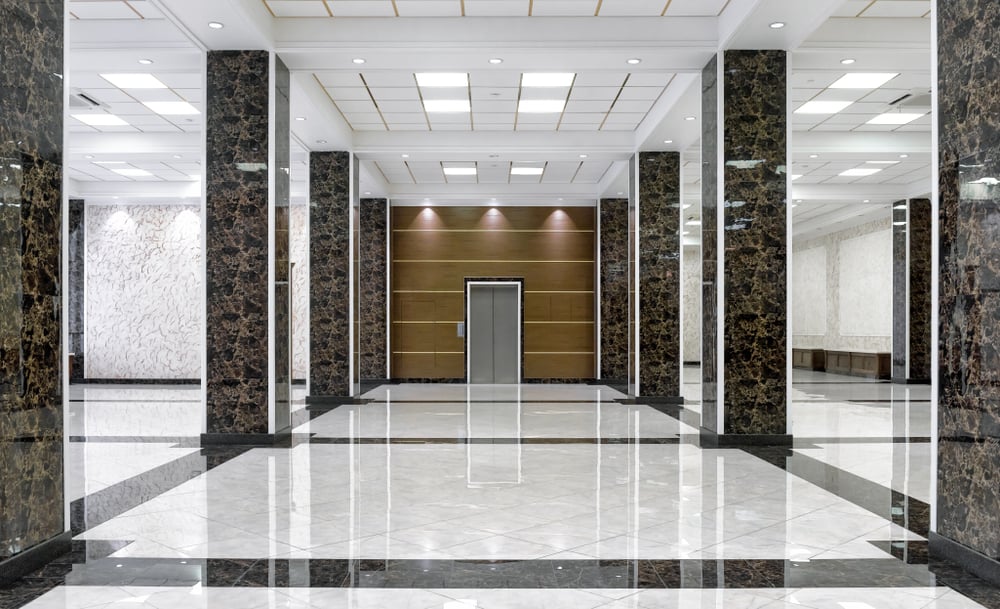
Spacious, modern building lobby with shiny marble floors enhanced by expert stone restoration NYC, dark marble columns, and bright ceiling lights. An elevator with wooden paneling is centered at the far end of the room.

Still Have Questions?

We’re here to help. Reach out to our team anytime!

Will diamond abrasive grinding fix my specific type of stone floor?
Diamond abrasive grinding works on virtually all natural stone—marble, granite, travertine, limestone, terrazzo, and most engineered stones. The technique is universal, but the approach changes based on the stone’s hardness and composition. Softer stones like marble need gentler grit progressions to avoid over-grinding, while harder stones like granite can handle more aggressive initial passes. We assess your specific material before starting to determine the right diamond sequence and technique. If your floor has lippage, scratches, dullness, or uneven wear, grinding can address it regardless of the stone type. The question isn’t whether it works on your stone—it’s whether your stone has damage that needs this level of intervention versus lighter honing or polishing.
Most residential stone floor grinding projects in NYC & Long Island take one to three days depending on square footage and damage severity. A typical bathroom or kitchen floor can be completed in a day. Larger areas like open-concept living spaces or commercial lobbies might need two to three days. Severe lippage or deep scratches require more grinding passes, which adds time. The floor needs to cure after sealing, usually a few hours, before you can walk on it normally. For commercial properties, we often schedule work during off-peak hours or weekends to keep your business operational. You’ll have a realistic timeline during the initial assessment, so you can plan accordingly without surprises.
No. Professional diamond grinding is a wet process—water runs continuously over the surface while we work. This cools the diamond abrasives, lubricates the cutting action, and most importantly, captures stone dust before it becomes airborne. The slurry created is vacuumed up in real time, making the process virtually dust-free. You won’t have powder settling on furniture, getting into HVAC systems, or coating every surface in your space. We also use containment barriers and protective coverings for adjacent areas. The result is a controlled, clean process that’s safe for occupied buildings and won’t leave you dealing with a massive cleanup afterward. If you’ve heard horror stories about dusty stone work, those likely involved dry grinding methods we don’t use.
Yes. Lippage removal through diamond grinding is specifically designed to correct poor installation. Even if your floor was installed years ago with significant height differences between tiles, grinding can level it by removing the high spots. We use planetary grinders with metal-bonded diamond plates capable of handling substantial lippage—sometimes an eighth of an inch or more, depending on tile thickness. The process grinds down raised tiles until they’re flush with lower ones, creating a completely flat plane. Once leveled, the floor is honed and polished to your desired finish. This eliminates the visible tile pattern and gives you a seamless, monolithic appearance. The floor becomes safer, easier to clean, and looks like it was installed correctly from the start.
Diamond grinding restoration typically runs three to eight dollars per square foot in NYC & Long Island, depending on stone type, condition, and finish level. Full replacement involves demolition, disposal, new material, and installation labor—usually fifteen to fifty dollars per square foot or more for quality stone. You’re looking at five to ten times the cost for replacement in most scenarios. Beyond direct cost, replacement means weeks of disruption, dust from demolition, and the risk of discovering substrate problems once the old stone is removed. Restoration preserves your existing investment, completes in days instead of weeks, and delivers a finish that looks identical to new installation. Unless your stone is structurally compromised or you’re changing the entire aesthetic, restoration is the financially smart move.
Professionally ground and sealed stone floors typically last eight to ten years or longer before needing another full restoration. Longevity depends on stone type, foot traffic, sealing quality, and daily maintenance practices. A high-traffic commercial lobby in Manhattan will wear faster than a residential bathroom in a Long Island home. The key factors are using pH-neutral cleaners, resealing every few years, and addressing spills quickly. Some property owners do light honing or polishing touch-ups every few years to maintain the finish, while others go a decade or more without major work. When we complete your restoration, we’ll walk you through the specific maintenance your stone type needs to maximize the lifespan of the finish.
Logo featuring the text "NYC Stone Care" with the "Y" in "NYC" stylized in red. The white background and green border highlight this stone restoration NYC brand’s professional look.

100 Park Ave.
New York, NY 10017

Opening Hours

Monday: 8:00am – 5:00pm
Tuesday: 8:00am – 5:00pm
Wednesday: 8:00am – 5:00pm
Thursday: 8:00am – 5:00pm
Friday: 8:00am – 5:00pm

Pin It on Pinterest

Share This