Serving NYC & Long Island info@nycstonecare.com
24/7 Availability

Marble Restoration Service NYC & Long Island

Your Marble Can Look New Again

Dull spots, etching, scratches—they don’t mean your marble is ruined. Our professional marble restoration service in NYC & Long Island brings back the shine, removes damage, and protects your investment for less than you’d expect.

Over a Decade Serving NYC

We've restored marble across New York City and Long Island for more than ten years, handling everything from brownstone floors to luxury high-rise countertops.

Licensed and Fully Insured

Every project is backed by proper licensing and insurance, giving you protection and peace of mind when we're working in your home or building.

State of the Art Equipment

We use professional-grade diamond pads, polishing systems, and sealing products to ensure your marble gets the treatment it actually needs, not a quick fix that fades.

Eco Friendly Stone Care

The products and methods we use protect your health and the environment while delivering results that last, keeping your space safe during and after restoration.

Professional Marble Care Service NYC

What Marble Restoration Actually Does

Marble restoration isn’t just cleaning. It’s a complete process that removes damaged surface layers, grinds away etching and scratches, polishes the stone back to its original finish, and seals it against future damage. Whether your marble floors in NYC have lost their shine from foot traffic or your countertops are covered in dull spots from acidic spills, restoration brings the stone back to life without the cost or hassle of replacement. This service works for kitchens, bathrooms, entryways, lobbies, and any marble surface that’s seen better days.

Marble Polishing and Repair NYC

What You Get When Marble Is Restored Right

Professional marble restoration service in NYC & Long Island doesn't just make your floors or countertops look better—it actually fixes the damage and protects the stone going forward.

Etching, scratches, and dull spots disappear completely because the damaged layer is physically removed and the surface is rebuilt to its original smoothness.
Your marble regains that deep, consistent shine across every inch, eliminating worn traffic patterns and cloudy areas that cleaning never could touch.
Professional sealing after marble polishing in NYC gives you critical extra minutes to wipe spills before they penetrate and stain permanently.
You skip the expense and chaos of replacement—saving thousands of dollars while getting results that look identical to brand new marble.
Daily maintenance becomes genuinely easier because smooth, sealed marble resists dirt and doesn’t trap grime in damaged pores like untreated stone does.
You choose the finish that matches your lifestyle—glossy polish for formal elegance or honed matte that forgives daily wear in busy kitchens and hallways.

Marble Floor Restoration NYC & Long Island

Why Marble Loses Its Shine

Marble is calcium carbonate, which means it reacts chemically when it touches anything acidic. Lemon juice, wine, vinegar, tomato sauce, even some cleaning products—they all dissolve a tiny layer of the surface, creating dull spots called etching. Most people think it’s a stain and try to clean it off, but you can’t clean away etching because the stone itself has been chemically altered. That’s why regular cleaners don’t work and why using harsher products only creates more damage.

Beyond etching, marble scratches more easily than granite or quartz because it’s softer. Grit from shoes, dragging pots across countertops, or using abrasive cleaning tools all leave visible marks. Over time, high-traffic areas in NYC homes and Long Island properties lose their polish just from people walking across them. None of this means your marble is ruined. It means the surface needs professional marble floor restoration in NYC using the right equipment and techniques, not harsher chemicals or more scrubbing.

Marble Cleaning and Restoration Near You

What's Included in Professional Restoration

The process starts with a full assessment to see what your marble actually needs. Some surfaces just need polishing. Others require grinding to remove deeper damage. After cleaning the stone with pH-neutral products that won’t cause more etching, we use diamond abrasive pads in progressive grits—starting coarse to remove scratches and etch marks, then moving to finer pads that smooth and polish the surface back to perfection.

If you want a high-gloss finish, the final step involves ultra-fine buffing or crystallization to create that mirror-like shine. If you prefer a honed matte finish that hides wear better in kitchens or high-traffic floors, the process stops at an earlier grit for that velvety smooth feel. Either way, marble cleaning and restoration in NYC includes sealing to protect the stone from absorbing stains. The entire process is done on-site, usually in a few hours for countertops or a day for larger floors, and you’re left with marble that looks and feels brand new.

Marble Repair and Restoration Process

How Your Marble Gets Restored

01

Surface Assessment and Cleaning

We inspect the stone to identify etching, scratches, stains, and wear patterns, then deep-clean with marble-safe products to remove all surface debris before work begins.

02

Grinding, Honing, and Polishing

We use diamond pads to remove damaged layers, smooth out scratches and etch marks, and progressively polish the surface to your desired finish—glossy or matte.

03

Sealing and Final Inspection

We apply a penetrating sealer to protect against stains, then inspect the entire surface to ensure consistent results and your complete satisfaction.

Frequently Asked Questions

Find answers to common questions about our services, process, and how we work.
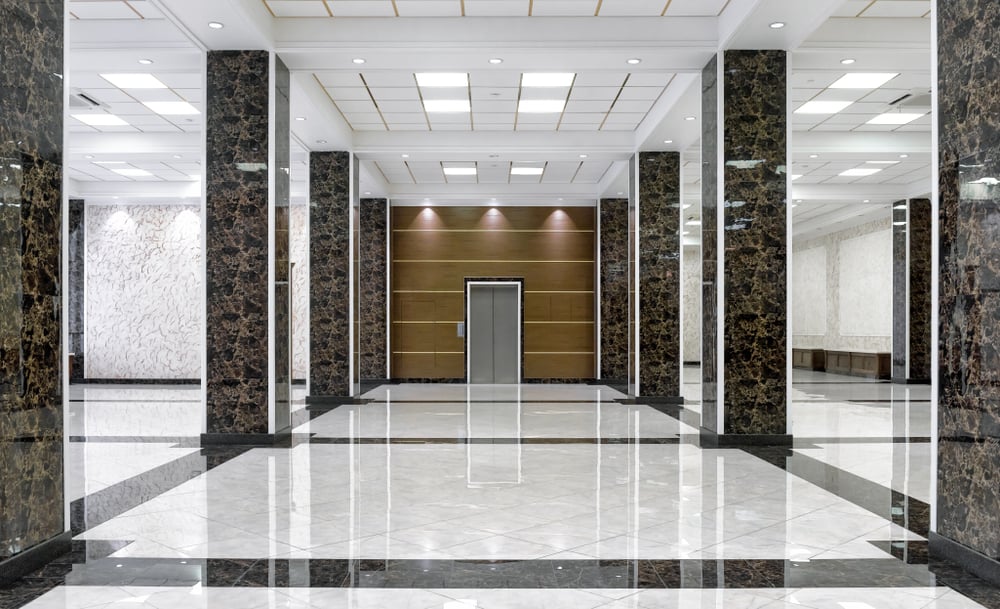
Spacious, modern building lobby with shiny marble floors enhanced by expert stone restoration NYC, dark marble columns, and bright ceiling lights. An elevator with wooden paneling is centered at the far end of the room.

Still Have Questions?

We’re here to help. Reach out to our team anytime!

What's the difference between etching and staining on marble?
Etching is a chemical reaction that happens when acid touches marble and dissolves the surface, leaving dull spots or rings. Staining is when a liquid penetrates the porous stone and leaves behind color. They look different and require different fixes. Etching feels rough to the touch and appears lighter or cloudy. Stains feel smooth but show up as darker discoloration. You can’t clean away etching because the stone’s surface has been chemically altered—it needs to be polished or honed to remove the damaged layer. Stains can sometimes be removed with a poultice or deep cleaning, but prevention through sealing is the best approach. Most people confuse the two, which is why trying to clean etch marks with harsher products only makes the problem worse by creating more etching.
Professional marble restoration typically costs a fraction of what replacement would run. For a standard kitchen countertop, restoration usually ranges from around $450 to $3,000 depending on size and condition, while tearing out and replacing the same marble could easily cost $5,000 to $15,000 or more once you factor in demolition, new stone, fabrication, and installation. Marble floor restoration in NYC follows a similar pattern—restoration is charged per square foot and addresses the existing stone, while replacement involves removal, disposal, new material, and labor that adds up fast. The other advantage is time. Restoration is usually completed in hours or a day, while replacement can take weeks and leave your kitchen or bathroom unusable. Unless the marble is structurally damaged or you genuinely want a different material, restoration almost always makes more financial sense.
Yes, even marble that hasn’t been maintained in years can usually be restored. Heavy etching, deep scratches, embedded dirt, and worn areas are all fixable with the right equipment and process. We start with a thorough cleaning to remove buildup, then move to grinding and honing to remove the damaged surface layer. Depending on how deep the damage goes, this might require starting with coarser diamond pads before progressing to finer grits for polishing. Stains that have been sitting for years may need poultice treatments or specialized stain removal techniques. The key is having realistic expectations—if the marble has been stored outdoors or exposed to severe weathering, some discoloration or structural issues might remain. But in most cases, marble that looks beyond repair can be brought back to a condition that’s remarkably close to new with professional marble repair and restoration in NYC & Long Island.
If regular cleaning makes your marble look better, you don’t need restoration yet. But if you clean the surface and it still looks dull, cloudy, scratched, or uneven, that’s a sign the stone itself is damaged and needs more than soap and water. A simple test: after cleaning, run your hand across the marble. Does it feel rough or catch on certain spots? That’s etching or wear. Pour a small amount of water on a dull area—if it absorbs quickly, the seal is gone and the stone is vulnerable. Another clue is if you can see clear traffic patterns or worn spots that don’t improve no matter how much you clean. Marble restoration in NYC addresses physical damage to the stone’s surface, while cleaning just removes dirt. If you’re unsure, we can assess the condition and tell you exactly what’s needed without pushing unnecessary services.
No, sealing does not prevent etching or scratches. This is one of the biggest misconceptions about marble care. Sealers work by filling the pores of the stone, which slows down how quickly liquids can be absorbed—that helps prevent staining. But etching is a chemical reaction that happens on the surface when acid touches the calcium carbonate in marble, and a sealer doesn’t stop that reaction. Scratches are physical damage from abrasion, which also happens on the surface regardless of sealing. What sealing does is buy you time. If you spill wine or coffee on sealed marble, you have a few extra minutes to wipe it up before it soaks in and stains. But if that wine sits there long enough to etch the surface, the sealer won’t help. The best protection against etching is using coasters, cutting boards, and pH-neutral cleaners. Sealing is still important, just not for the reasons most people think.
Yes, one of the benefits of professional marble restoration is that you can change the finish. If your marble originally had a high-gloss polish that shows every etch mark and scratch, you can have it honed to a matte finish that’s much more forgiving in kitchens or high-traffic areas. Honed marble has a smooth, velvety feel and doesn’t show wear as obviously as polished marble does. On the flip side, if you have honed marble and want that elegant mirror-like shine, the stone can be polished to a high gloss. The process is the same up to a certain point—grinding and honing smooth out the surface—but the final steps determine whether you end up with matte or glossy. Many people in NYC & Long Island switch from polished to honed for kitchen countertops and floors because it’s easier to maintain and still looks beautiful. We can show you samples and help you decide which finish fits your space and lifestyle.

Pin It on Pinterest

Share This