Logo featuring the text "NYC Stone Care" with the "Y" in "NYC" stylized in red. The white background and green border highlight this stone restoration NYC brand’s professional look.

Stone Countertop Restoration NYC & Long Island

Your Countertops Can Look New Again

Dull marble, etched granite, chipped edges—you don’t need to replace them. Professional stone countertop restoration in NYC & Long Island brings back the shine, fixes the damage, and costs a fraction of replacement. Most jobs finish in a day.

Over a Decade of Experience

We've restored stone surfaces across NYC and Long Island for more than ten years, handling everything from marble to granite with precision.

Stone-Specific Expertise

Marble etches differently than granite. We understand each stone type and use the right techniques, tools, and products for your specific surface.

Professional-Grade Equipment

We use diamond abrasives and state-of-the-art polishing systems—not DIY kits or harsh chemicals—to restore your countertops safely and effectively.

Transparent Process Every Time

You'll get a thorough assessment, clear explanation of what we'll do, and a final inspection to confirm you're completely satisfied with the results.

Marble & Granite Countertop Restoration NYC

Restoration That Actually Works

Your stone countertops took a beating. Coffee rings that won’t budge. Etch marks from last week’s lemon juice. Chips near the sink that keep catching your eye. You’re wondering if it’s time to rip everything out and start over.

Here’s what most people don’t know: professional stone countertop restoration can fix almost all of that. We’re not talking about a quick polish or some spray-on product. This is a full restoration process—repairing chips and cracks, removing etches and stains, honing the surface with diamond abrasives, polishing to your preferred finish, and sealing to protect against future damage. The process brings marble, granite, quartzite, limestone, and other natural stone back to the condition you remember when it was first installed.

If your countertops are structurally sound but visually worn, restoration makes sense. It costs 50-70% less than replacement, takes about a day for most kitchens, and lets you keep the exact stone you already have. Every slab is unique. Replacement means losing that specific pattern and color forever.

Kitchen Stone Countertop Polishing Long Island

What You Get After Restoration

This isn't just about making your countertops look better. It's about getting back the kitchen or bathroom you actually want to use and show off.

Your countertops will have that deep, reflective shine again—the kind that makes the whole room feel cleaner and more expensive.
Chips, cracks, and etch marks disappear or become nearly invisible, so you’re not constantly noticing the damage every time you walk by.
Proper sealing protects against future stains and makes daily cleaning easier—spills bead up instead of soaking in.
You’ll save thousands compared to replacement, and the work gets done in a day instead of weeks of demolition and installation.
If you’re selling, restored countertops add value—buyers want pristine stone, not surfaces that look worn out or neglected.
You keep your exact stone with its unique veining and color, instead of starting over with a slab that won’t match perfectly.

Stone Countertop Repair NYC & Long Island

Different Stones, Different Problems

Not all stone behaves the same way. Marble and limestone are calcium-based, which means acids—lemon juice, wine, vinegar, even some cleaners—will etch the surface. That’s a chemical reaction, not a stain. You can’t wipe it away. It requires mechanical re-polishing with diamond pads to restore the finish.

Granite is harder and doesn’t etch from acids, but it can still dull over time from wear, lose its sealer, or develop chips and cracks from impact or thermal shock. Quartzite sits somewhere in between—extremely hard but sometimes reactive depending on its mineral composition.

The point is this: what works for one stone can damage another. A lot of DIY attempts or inexperienced companies make things worse by using the wrong products or techniques. We assess your specific stone type, identify what caused the damage, and use the appropriate restoration method. That might mean honing out etches on marble, color-matched epoxy repair for granite chips, or deep stain removal with professional-grade poultices. The approach changes based on what you have and what it needs.

Countertop Stone Refinishing NYC

What the Restoration Process Actually Includes

First, we assess the damage. We’re looking at etching, stains, chips, cracks, dullness, and sealer condition. This tells us what needs to happen and in what order.

If there are chips or cracks, we repair those first using color-matched adhesives and epoxies. The goal is a seamless repair that blends with the surrounding stone. For stains that have penetrated deep into the pores, we may use poultices—absorbent materials mixed with the right chemical to draw the stain back out.

Next comes honing. We use progressively finer diamond abrasive pads to remove surface damage like scratches and etch marks. This levels the stone and prepares it for polishing. The grit sequence depends on how much material needs to be removed—we might start at 400 grit and work up through 800, 1500, 3000, or higher.

Polishing brings back the shine. You can choose your finish level: honed (matte), semi-gloss, gloss, or high-gloss mirror finish. Each has a different look and maintenance requirement.

Finally, we seal the stone. Sealing fills the microscopic pores to prevent liquids from penetrating and staining. It doesn’t stop etching on calcium-based stones, but it does protect against oil, water, and most common spills. We’ll also give you guidance on how to maintain the surface and when to reseal.

Stone Restoration Process Long Island & NYC

How We Bring Your Stone Back

01

Assessment & Consultation

We inspect your countertops, identify the stone type and damage, explain what we can fix, and give you a clear estimate before any work starts.

02

Repair, Honing & Polishing

We repair chips and cracks, remove etches and scratches with diamond abrasives, then polish the surface to your preferred finish level.

03

Sealing & Final Inspection

We apply professional-grade sealer to protect against future damage, inspect the finished work, and walk you through proper maintenance to keep it looking great.

Frequently Asked Questions

Find answers to common questions about our services, process, and how we work.
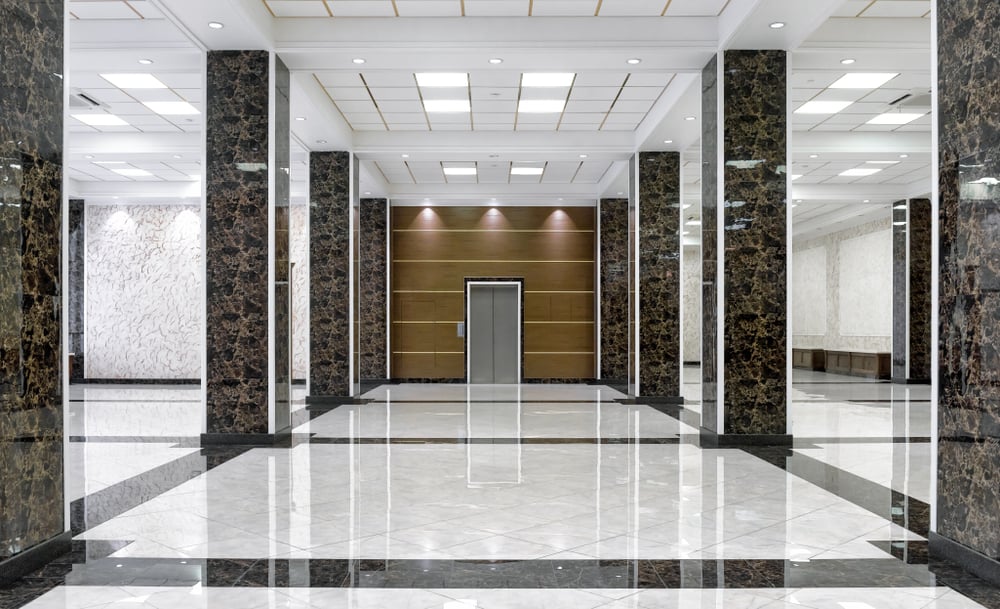
Spacious, modern building lobby with shiny marble floors enhanced by expert stone restoration NYC, dark marble columns, and bright ceiling lights. An elevator with wooden paneling is centered at the far end of the room.

Still Have Questions?

We’re here to help. Reach out to our team anytime!

How much does stone countertop restoration cost in NYC and Long Island?
Cost depends on the size of your countertops, the type of stone, and the extent of damage. Most marble countertop restoration projects in NYC range from $5 to $25 per square foot, while granite countertop restoration typically falls in a similar range. That’s significantly less than replacement, which can run $10,000 to $17,000 or more for an average kitchen in the NYC area. The big advantage is that restoration gives you back the countertops you already have—with their unique patterns and colors—for a fraction of what new stone would cost. We provide free estimates after assessing your specific situation, so you’ll know exactly what to expect before we start any work.
Yes. Etch marks are one of the most common problems we see on marble and other calcium-based stones like limestone and travertine. Etching happens when acidic substances—wine, lemon juice, vinegar, coffee, or even some cleaning products—come into contact with the stone and chemically react with the calcium carbonate. This creates dull, rough spots that won’t wipe away no matter how much you clean. The only way to fix etching is through mechanical re-polishing using diamond abrasive pads in a specific grit sequence. We hone out the damaged layer and restore the polished finish. Light etching can often be addressed quickly, while deeper etching requires more extensive honing. Either way, the result is a smooth, uniform surface that matches the rest of your countertop.
Most stone countertop restoration projects in NYC and Long Island are completed in one day. The exact timeline depends on the size of the area, the type of stone, and how much repair work is needed. A standard kitchen with moderate wear—some dullness, a few etch marks, maybe a chip or two—typically takes between four and eight hours. Larger spaces or countertops with extensive damage might require additional time. The process is done on-site, so there’s no need to remove your countertops or wait weeks for fabrication like you would with replacement. You’ll have limited access to your kitchen during the work, but by the end of the day, your countertops are restored and ready to use. We’ll let you know the timeline during the initial assessment.
Our goal is to make repairs as invisible as possible. We use color-matched epoxies and adhesives specifically formulated for stone repair, and we blend them to match your countertop’s exact color and pattern. For most chips and small cracks, the repair becomes nearly undetectable once it’s polished and sealed. There are limits—if you have a large crack that runs across the entire slab or significant structural damage, the repair will be more visible, and in some cases replacement might be the better option. But for the majority of chips around sink edges, small corner breaks, and hairline cracks, professional repair delivers results that blend seamlessly with the surrounding stone. The key is using the right materials and techniques, which is why DIY kits often fall short.
Yes. We restore marble, granite, quartzite, limestone, travertine, soapstone, slate, and other natural stone countertops throughout NYC and Long Island. Each stone type has different characteristics and requires specific techniques. Marble and limestone are softer and more prone to etching, so we use methods that address chemical damage without over-honing. Granite is harder and more resistant to acids but can still dull or chip, requiring diamond polishing and sometimes structural repair. Quartzite is extremely hard and needs specialized equipment to hone and polish effectively. We’ve worked with all of these materials for over a decade, so we understand how each one behaves and what it needs to look its best again.
Most natural stone countertops should be resealed at least once a year, though the exact frequency depends on the type of stone and how much use it gets. Lighter-colored stones and more porous materials like marble and limestone typically need sealing more often—sometimes every six months in high-use kitchens. Darker granite and denser stones can go longer between applications. You can test whether your countertops need resealing by placing a few drops of water on the surface and waiting 5 to 10 minutes. If the water beads up, your sealer is still working. If it soaks into the stone and darkens the surface, it’s time to reseal. We apply professional-grade impregnating sealers during restoration that penetrate deep into the stone’s pores and provide long-lasting protection. We’ll also give you specific guidance based on your stone type and usage patterns.
Logo featuring the text "NYC Stone Care" with the "Y" in "NYC" stylized in red. The white background and green border highlight this stone restoration NYC brand’s professional look.

100 Park Ave.
New York, NY 10017

Opening Hours

Monday: 8:00am – 5:00pm
Tuesday: 8:00am – 5:00pm
Wednesday: 8:00am – 5:00pm
Thursday: 8:00am – 5:00pm
Friday: 8:00am – 5:00pm

Pin It on Pinterest

Share This