Logo featuring the text "NYC Stone Care" with the "Y" in "NYC" stylized in red. The white background and green border highlight this stone restoration NYC brand’s professional look.

Marble Diamond Polishing NYC & Long Island

Dull Stone Fixed. Mirror Finish Restored.

If your marble looks tired, scratched, or lifeless, diamond polishing brings back the mirror-like finish you paid for. We use industrial-grade diamond pads and proven techniques to restore natural stone surfaces across NYC & Long Island—without the dust, downtime, or guesswork.

Dust-Free Diamond Polishing Process

Water-lubricated diamond grinding keeps your space clean while removing scratches, etches, and dullness from marble and natural stone surfaces.

Trained Natural Stone Technicians

Our team knows the difference between marble, granite, and limestone—and exactly which diamond grit sequence restores each one correctly.

Progressive Grit Refinement System

We move through 50 to 3000 grit diamond pads in sequence, removing imperfections layer by layer until your stone reflects like glass.

Results That Last Years

Diamond pad polishing delivers a deep, natural shine that holds up for two to five years—not weeks like chemical treatments.

Stone Diamond Polishing NYC

What Diamond Polishing Actually Does

Diamond polishing isn’t a spray or a wax. It’s a mechanical process that removes a microscopic layer of damaged stone to reveal the clean surface underneath, then refines it to a mirror finish using progressively finer diamond abrasives. Think of it like sanding wood, but for stone—starting rough, finishing smooth. The process works on marble, travertine, limestone, and other calcite-based stones that have lost their shine from foot traffic, scratches, or acidic spills.

Most people don’t realize the shine on marble isn’t something sitting on top of the stone. It’s the stone itself, polished down to a level where light bounces cleanly off the surface instead of scattering. That’s why you can’t buff it back with a cleaner. You need diamond abrasives and the skill to use them without damaging the stone. That’s where we come in.

Marble Floor Polishing Service NYC

What You Get With Professional Diamond Polishing

We're not here to make vague promises. Here's what actually changes when your stone gets restored the right way.

Your floors go from dull and cloudy to reflective enough that you’ll see the ceiling in them again.
Scratches from furniture, shoes, and daily wear disappear as we grind down to fresh stone and re-polish the surface.
Etch marks from lemon juice, wine, or cleaning products get removed and blended back into the original finish.
The stone becomes easier to clean because a properly polished surface has fewer pores where dirt can settle.
You avoid the cost of replacement, which runs thousands more than restoration and still leaves you with the same stone type.
Protective sealing after polishing keeps the finish intact longer and makes future spills less likely to stain or etch.

Natural Stone Polishing Long Island

Why Diamond Pads Beat Every Other Method

You’ll find companies offering “marble polishing” that spray a chemical, buff it with a pad, and call it done. That’s crystallization, and it’s a band-aid. It sits on top of the stone, wears off in months, and does nothing to fix scratches or etches underneath. Diamond polishing is different. It removes the damaged layer, refines the surface mechanically, and brings out the stone’s natural reflectivity from within.

The process starts with coarse diamond pads—usually 50 to 120 grit—to remove deep scratches, lippage, and surface damage. Then we move through medium grits like 200 and 400 to smooth out the grinding marks. By the time we hit 800 grit, you start seeing a soft sheen. At 1500 and 3000 grit, the stone goes full mirror. Some jobs go higher, depending on the finish you want. Each step removes the marks left by the previous one, refining the surface until imperfections are smaller than the wavelength of light. That’s when the stone pops with color and clarity you haven’t seen in years.

Water keeps the process dust-free and prevents the stone from overheating. Everything gets vacuumed up as slurry. No mess, no airborne particles, no damage to surrounding areas. And because we’re working with the stone itself—not coating it—the results last years, not months.

Diamond Pad Polishing NYC & Long Island

What's Included in the Full Process

We don’t just show up and start grinding. Every job begins with an inspection to identify the stone type, assess the level of damage, and determine the starting grit. Marble needs a different approach than granite. Dolomitic marble polishes differently than calcite marble. If we start with the wrong grit or skip a step, the finish won’t hold.

After inspection, we clean the surface to remove dirt, oils, and residue that could interfere with the abrasives. Then comes grinding, which flattens uneven tiles, removes deep scratches, and eliminates lippage—the ledges you feel between tiles. Honing follows, using finer diamond pads to smooth the surface and start developing the sheen. Polishing brings it to the final gloss level, whether you want a soft satin finish or full mirror shine. Some clients prefer honed marble for floors because it hides wear better and doesn’t show dust. Others want high gloss for countertops and walls. We can do both.

Once the stone is polished, we seal it with a penetrating sealer that protects against stains and moisture without changing the appearance. The sealer fills the microscopic pores, making the surface more resistant to spills and easier to maintain. We also offer crystallization as a final step for clients who want an extra layer of hardness and shine, though it’s optional and not a replacement for proper diamond polishing.

Stone Surface Polishing Process NYC

How We Restore Your Stone Step by Step

01

Inspection and Surface Assessment

We identify your stone type, check for cracks or damage, and determine the right starting grit and process for your specific surface.

02

Diamond Grinding and Honing

Using progressively finer diamond pads, we remove scratches, flatten uneven areas, and refine the surface from rough to smooth.

03

Polishing, Sealing, and Final Inspection

We polish to your desired finish, apply protective sealer, and inspect the completed work to ensure uniform shine and quality.

Frequently Asked Questions

Find answers to common questions about our services, process, and how we work.
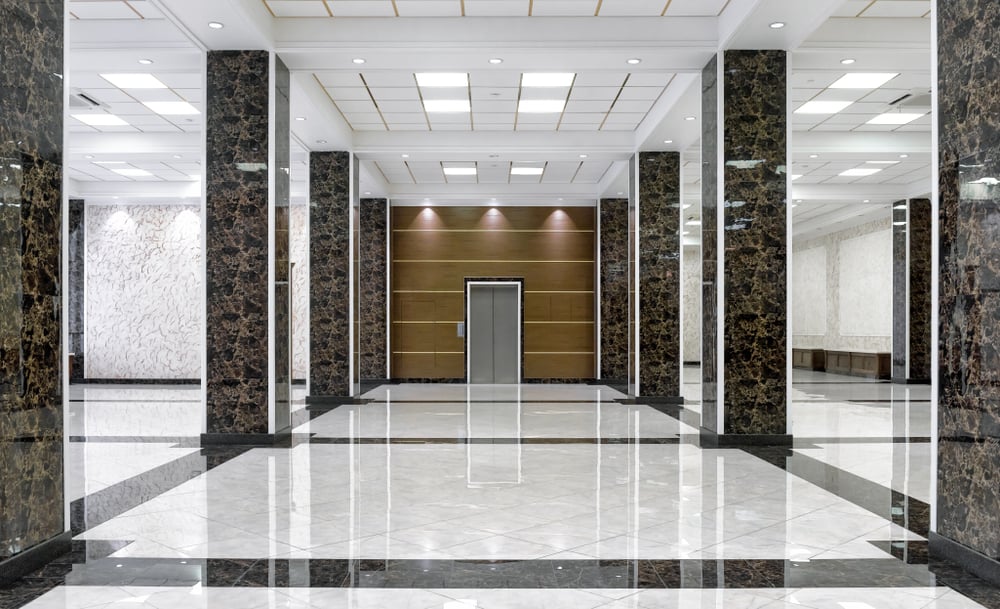
Spacious, modern building lobby with shiny marble floors enhanced by expert stone restoration NYC, dark marble columns, and bright ceiling lights. An elevator with wooden paneling is centered at the far end of the room.

Still Have Questions?

We’re here to help. Reach out to our team anytime!

How long does marble diamond polishing last compared to other methods?
Diamond polishing lasts two to five years depending on traffic and maintenance, which is significantly longer than crystallization or topical treatments that wear off in a few months. The reason is simple: diamond polishing mechanically refines the stone itself, removing the damaged layer and creating a smooth, reflective surface from within. Chemical methods sit on top of the stone and break down over time from cleaning, foot traffic, and spills. With diamond polishing, you’re restoring the actual stone, not masking the damage. Proper sealing after polishing extends the life of the finish even further by protecting against stains and moisture. High-traffic commercial floors may need re-polishing sooner, while residential countertops and low-traffic areas can go longer between services.
Yes, diamond polishing removes most scratches and etch marks by grinding down to fresh stone below the damage, then refining the surface back to a polished finish. Light scratches and etches come out easily with medium to high grit diamond pads. Deeper scratches require starting with coarser grits—sometimes as low as 50 or 100—to remove enough material to reach undamaged stone. Etch marks from acidic spills like lemon juice or vinegar are surface-level damage that responds well to honing and polishing. The key is using the right grit sequence and not skipping steps, which can leave haze or uneven shine. For gouges deeper than about a thirty-second of an inch, we may need to fill them with color-matched epoxy before polishing. But most everyday wear, scratches, and etches are completely reversible with proper diamond polishing.
No. We use wet polishing methods that trap dust and debris in water, which gets vacuumed up as slurry during the process. Modern diamond polishing is nearly dust-free, and we protect surrounding areas with plastic sheeting and tape to prevent splatter or damage. The equipment runs on standard electrical outlets, and we work in sections to minimize downtime. For residential jobs, you can usually stay in the home while we work, though you’ll want to keep kids and pets out of the immediate area. Commercial spaces can often continue operations in other sections of the building. The biggest disruption is keeping foot traffic off the floor while it dries after sealing, which typically takes a few hours. We schedule around your needs and clean up completely before we leave, so you’re left with restored stone and no mess.
A polished finish is high-gloss and reflective, like a mirror, while a honed finish is smooth but matte with no shine. Both are created using diamond abrasives, but polished finishes go through finer grits—usually up to 3000 or higher—to achieve maximum reflectivity. Honed finishes stop at lower grits, typically around 400 to 800, which leaves the surface smooth but not shiny. Polished marble shows off the stone’s color and veining dramatically, but it also shows every speck of dust, water spot, and scratch. Honed marble hides wear better, which is why many people prefer it for high-traffic floors. It’s also less slippery when wet. For countertops and walls, polished finishes are more common because they’re easier to wipe clean and look more formal. We can create either finish depending on your preference, and we can even match an existing finish if you’re restoring only part of a floor.
Cost varies based on the size of the area, the condition of the stone, and the type of finish you want, but most residential jobs range from three to eight dollars per square foot. Commercial projects and large floor restorations may cost less per square foot due to economies of scale. Factors that affect price include how much grinding is needed to remove scratches or lippage, whether repairs are required for cracks or chips, and whether you’re adding sealing or crystallization. A small bathroom countertop might run a few hundred dollars, while a large lobby floor could be several thousand. The key is that professional diamond polishing costs a fraction of what you’d pay to replace the stone, and the results last years. We provide free estimates after inspecting your stone, so you know exactly what the job will cost before we start. No surprises, no upselling—just honest pricing based on the work your stone actually needs.
Yes. We work on everything from apartment bathroom floors and kitchen countertops to hotel lobbies, office building entryways, and retail spaces across NYC and Long Island. The process is the same whether it’s a hundred square feet or ten thousand—inspect, grind, hone, polish, seal. Commercial jobs often require scheduling around business hours to minimize disruption, and we’re set up to work nights or weekends if needed. Residential clients appreciate that we protect floors, furniture, and fixtures, and we clean up completely before leaving. Stone is stone, whether it’s in a penthouse or a corporate lobby, and we treat every job with the same attention to detail. If you’ve got marble, travertine, limestone, or another natural stone that needs restoration, we can handle it—no matter the size or location.
Logo featuring the text "NYC Stone Care" with the "Y" in "NYC" stylized in red. The white background and green border highlight this stone restoration NYC brand’s professional look.

100 Park Ave.
New York, NY 10017

Opening Hours

Monday: 8:00am – 5:00pm
Tuesday: 8:00am – 5:00pm
Wednesday: 8:00am – 5:00pm
Thursday: 8:00am – 5:00pm
Friday: 8:00am – 5:00pm

Pin It on Pinterest

Share This