
That dull, scratched marble floor isn't a cleaning problem. Here's how to tell when it's time to call in a professional — and what actually happens when you do.
Share:
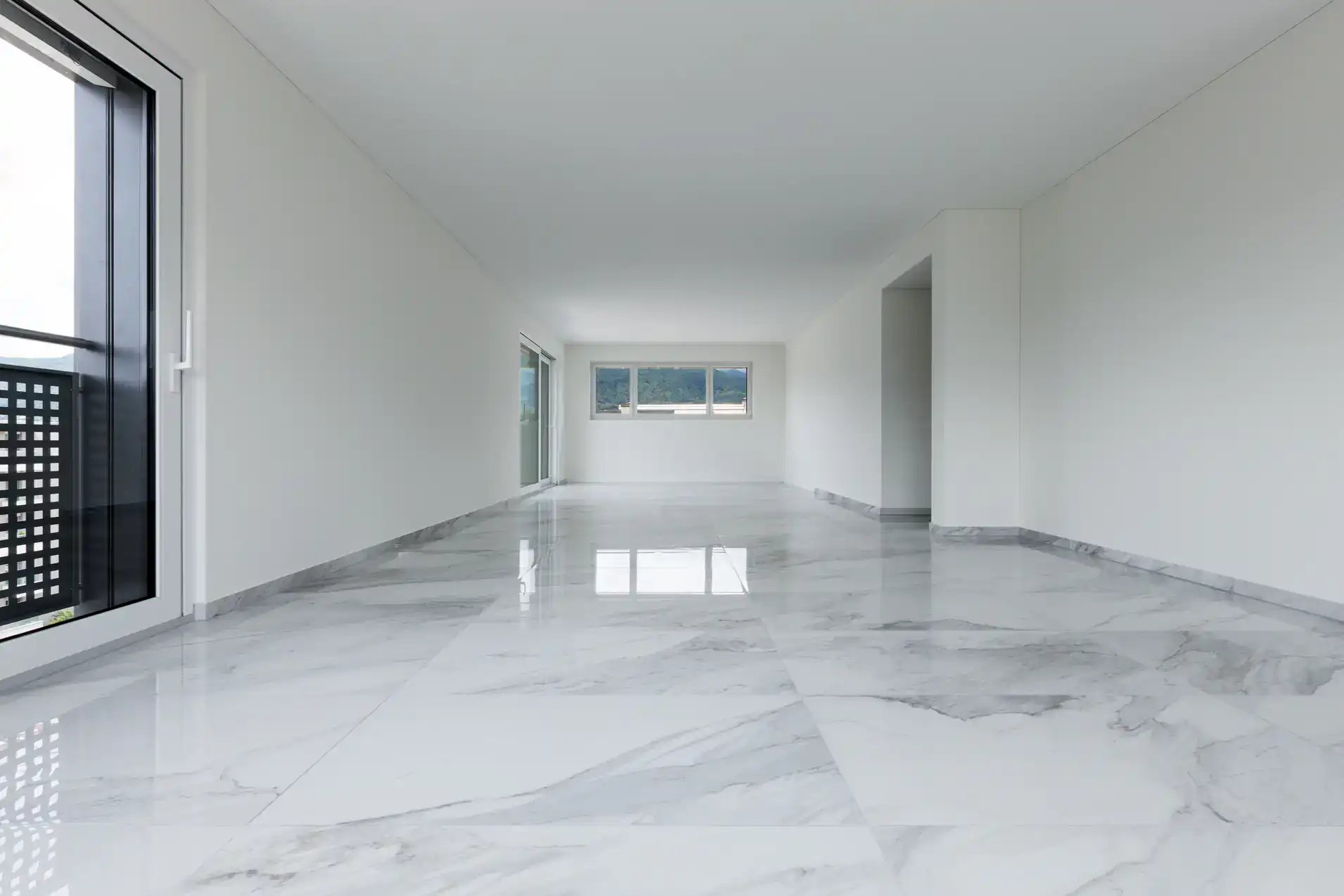
Summary:
You’ve mopped it, tried the specialty cleaner, maybe even scrubbed it by hand — and your marble floor still looks dull, cloudy, or just off. It’s frustrating, especially when you know what it used to look like.
Here’s the thing: what you’re dealing with probably isn’t a cleaning problem. Most of the time, when marble stops responding to cleaning, it’s because the damage is in the surface itself — not on top of it. No mop or product is going to fix that.
This page will help you figure out exactly what’s going on with your marble, what the difference is between cleaning and restoration, and when it makes sense to call us in.
Cleaning addresses what’s sitting on the surface — dirt, residue, buildup from everyday use. Done right, with a pH-neutral cleaner and a microfiber mop, it keeps maintained marble looking good between professional visits. The problem is that most people reach for whatever floor cleaner is under the sink, and a lot of those products are acidic enough to damage marble on contact.
Restoration is a different category entirely. It’s a mechanical process that addresses damage that’s already happened inside the surface — dullness, etching, scratches, cracks. It requires professional-grade diamond abrasive equipment working through a progressive sequence of grits to physically remove the compromised layer and reveal the intact stone beneath. No consumer product does this. It’s not a matter of effort — it’s a matter of the right tools.
The most common culprit is etching. Marble is calcium carbonate, which means it reacts chemically with acids — citrus juice, wine, vinegar, and yes, many household cleaners. When an acidic substance contacts marble, it doesn’t just sit on the surface. It eats into it, leaving behind a dull, slightly rough patch that looks like a water stain or a hazy ring but won’t come off no matter what you use. That’s because it isn’t on the marble. It’s in it.
In Manhattan apartments, this happens constantly. A squeeze of lemon near the kitchen counter, a glass of wine on the coffee table, a cleaning crew that doesn’t know marble from ceramic tile — any of it can cause etching within seconds. In homes across Nassau County and Suffolk County, the same issue shows up in high-use kitchens and master baths, often made worse by hard water deposits that bond with the stone over time.
Scratches are another major factor. Foot traffic, furniture being dragged, even certain types of doormats can gradually abrade the surface. What starts as fine surface marks accumulates over years into a floor that looks worn and flat — not dirty, just tired. And then there’s general wear: the finish that once gave the marble its depth and reflectivity slowly degrades under use, leaving the stone looking like a shadow of what it was.
None of these respond to cleaning. They require mechanical intervention — specifically, honing with diamond abrasive pads that progressively flatten the surface and remove the damaged layer, followed by polishing to restore the finish. That’s restoration. And it’s the only thing that actually works.
This is the question most homeowners get stuck on, and it’s a fair one because the answer depends on how far the damage has progressed. Light etching and surface-level dullness can often be addressed with a targeted polishing treatment — a single visit, a few hours, and the floor looks dramatically different. That’s the best-case scenario, and it’s more common than people expect when they catch things early.
Full restoration is needed when the damage is deeper or more widespread. Significant scratches that you can feel when you run your hand across the surface, uneven texture from years of foot traffic, cracks or chips that have been ignored, or a floor that has been repeatedly cleaned with the wrong products and has lost most of its finish — these situations require a more involved process. The work area gets protected, the surface is deep-cleaned, diamond pads work through a grit sequence to hone the stone, repairs are made with color-matched epoxy where needed, and the floor is polished and sealed when it’s done. It takes longer, but the result is a floor that looks like it was just installed.
The honest answer to “which do I need?” is: we’d have to look at it. There’s no substitute for a professional assessment because marble varies — different stones, different finishes, different histories. A pre-war marble floor in a Park Avenue co-op is not the same as a newer marble installation in a Dix Hills colonial, and the approach has to match the stone. What we can tell you is that if your floor hasn’t responded to cleaning, it’s almost certainly past the point where cleaning will help — and the longer you wait, the more involved the fix becomes.
There are a few clear signals that tell you it’s time to stop cleaning and start restoring. Dullness that persists after cleaning is the most obvious one. If the floor looks flat, hazy, or lifeless regardless of what you use, the finish is compromised and needs to be mechanically restored.
Etch marks — those dull, slightly rough patches that appear after acidic contact — are another clear sign. So are visible scratches, a rough texture where the surface should feel smooth, and any cracks or chips that have appeared over time. If you’re noticing white, cloudy spots that seem to come and go, or areas where the marble looks almost bleached out, those are etches. They’re not going away on their own.
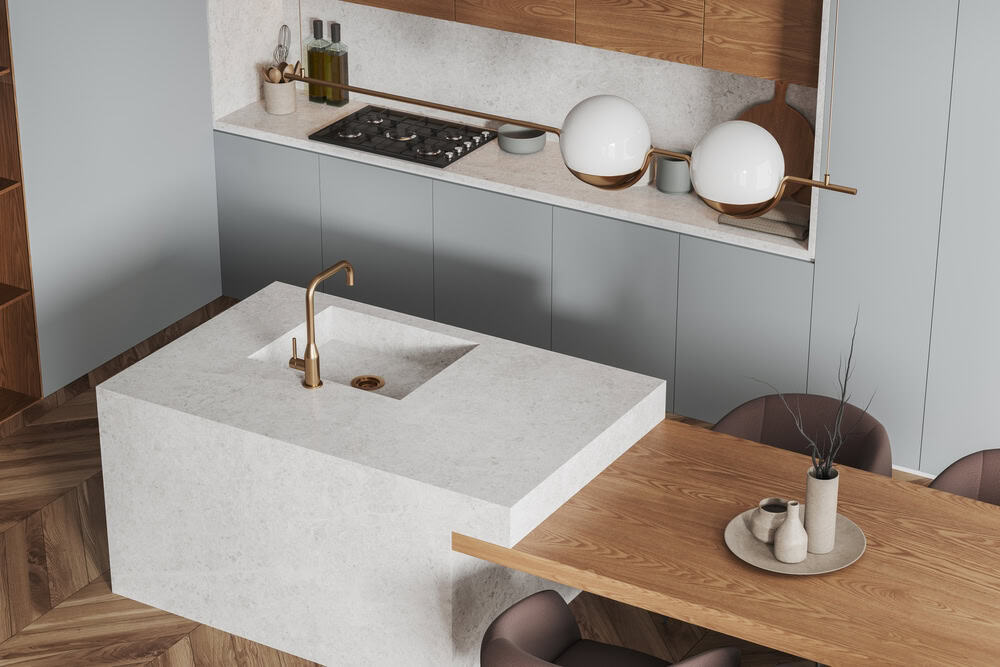
Manhattan apartments take a beating that most suburban homes don’t. The sheer volume of foot traffic in a space where the square footage is limited means marble floors in kitchens, entryways, and bathrooms are in constant use. Add in the particulate matter that comes in off the streets, the hard water that leaves mineral deposits on bathroom marble, and the fact that many building cleaning crews use whatever products are on hand — and you have a recipe for accelerated surface wear.
Pre-war buildings on the Upper West Side, Upper East Side, and along Park Avenue often have original marble from the 1920s through the 1950s. That stone is irreplaceable. It has a character and patina that new marble doesn’t, and it deserves specialist handling — not a generic floor buffer and a coat of commercial wax. When we work on marble in these buildings, we’re not just restoring a floor. We’re preserving something that’s been there for a hundred years.
There’s also the co-op and condo factor. Most Manhattan buildings require proof of insurance before a contractor can even get on the elevator — minimum $1 million in general liability is standard. They restrict work hours to weekdays between 8 and 5. Some require board approval for any work that might affect common areas. We know how these buildings operate because we’ve been working in them for over a decade. That familiarity matters when scheduling and logistics can be the difference between a smooth job and a headache.
In a market where Nassau County median home values have climbed significantly and homes are regularly selling above asking price, the condition of your interior finishes matters more than it ever has. Buyers at this price point notice marble. They notice when it looks worn, when there are etch marks on the kitchen countertop, when the master bath floor has lost its finish. And they factor it into their offer.
Marble restoration before listing is one of the highest-return investments a homeowner can make before going to market. The cost of a professional restoration is a fraction of what buyers will mentally deduct — or formally request in a price reduction — when they see damaged stone. A floor that looks new signals a home that’s been cared for. That perception carries real financial weight in a competitive market.
The same logic applies across Suffolk County, where luxury markets in Dix Hills, Northport, and Lloyd Harbor have seen significant price appreciation, and where buyers expect premium finishes to match premium prices. In the Hamptons — Southampton, East Hampton, Bridgehampton — many of these are second homes that sit vacant for months at a time. When the summer season opens, homeowners want the property to look its best immediately. The window for restoration work is late winter through early spring, before the season begins, and that timeline fills up fast.
One thing worth knowing about coastal Suffolk County properties: salt air and humidity accelerate marble degradation, particularly on outdoor terraces and in homes close to the water. If you have a beachfront property in the Hamptons or along the North Shore, your marble may need attention more frequently than an inland home — not because the stone is inferior, but because the environment is harder on it.
The short version: if cleaning isn’t working, stop cleaning and call us. Continuing to scrub a surface that needs mechanical restoration doesn’t help — and using the wrong products in the meantime can make the damage worse and more expensive to fix.
Early intervention is almost always less involved and less costly than waiting. A floor that needs a targeted polish today could need full restoration in a year if the damage is allowed to compound. And full restoration, while absolutely achievable, takes more time and investment than catching things early.
If you’re in Manhattan, Nassau County, or anywhere across Suffolk County and you’re not sure what your marble needs, we’ve been working with stone in this market for over a decade. We’ll tell you honestly what we’re looking at and what it will take to fix it — no pressure, no oversell. Reach out to NYC Stone Care and let’s take a look.
Article details:
Share:
Continue learning:


