New York, NY 10017

Marble Diamond Polishing vs. Traditional Methods: What Actually Restores Your Stone
Think all marble polishing delivers the same results? It doesn't. Here's what separates diamond polishing from the methods that only look good for a few months.
Share:
Summary:
If your marble looked sharp for a couple of months and then went dull again, you probably didn’t get diamond polishing. You got something applied on top of your stone — a coating, a wax, maybe a powder compound — and once foot traffic or daily use wore it down, the original damage came right back.
It’s a frustrating experience, and it’s more common than it should be. The term “marble polishing” gets used to describe several very different processes, and not all of them actually restore your marble. Some just mask the problem temporarily.
We’ll break down what diamond polishing actually is, how it compares to traditional methods, and when each approach makes sense — so you can make an informed decision before spending money on a service that may or may not solve your problem.
What Is Marble Diamond Polishing and How Does It Actually Work?
Diamond polishing is a mechanical process. We use diamond-impregnated abrasive pads — starting coarse, finishing ultra-fine — to physically remove the damaged surface layer of your marble and rebuild its reflectivity from within the stone itself. There’s no chemical reaction, no coating applied on top. The shine you see at the end is the stone’s own natural surface, smoothed to the point where light reflects off it uniformly.
The process moves through a sequence of grit levels. Coarser grits handle the heavy lifting — scratches, etch marks, dullness from years of foot traffic. Finer grits refine the surface progressively until you reach the finish level you want, whether that’s a soft matte, a satin sheen, or a full mirror gloss. Each stage builds on the last, and skipping steps is exactly what produces uneven results.
The Grit Sequence: Why the Steps Matter More Than the Equipment
A lot of people assume the quality of diamond polishing comes down to the machine being used. In reality, it comes down to the sequence of grits and the judgment of the person running them. The equipment matters, but it’s the staged progression — and knowing when to move from one grit to the next — that determines the final result.
The sequence typically starts in the coarse range for surfaces with visible scratches, etch marks, or heavy dullness. This stage removes the damaged layer entirely. From there, the work moves through medium grits that smooth out the abrasion marks left by the coarser pads. The final stages — running into the ultra-fine range for a high-gloss finish — compress the surface to the point where it reflects light cleanly and evenly.
For softer marbles like Crema Marfil, which is common in Long Island, NY homes, the starting grit and finishing grit differ from what you’d use on harder stone. Getting that wrong — starting too coarse on a soft marble, or stopping too early on a dense one — produces results that look fine at first and reveal problems within weeks.
This is also why we don’t subcontract our work. Our technician’s experience with different stone types, damage levels, and grit progressions is what separates a restoration that lasts years from one that needs to be redone. When you hire a company that sends whoever’s available that day, you’re gambling on skill level every time.
We use a wet-sanding technique throughout the process. This keeps the stone cool during grinding, allows the diamond pads to work more efficiently, and eliminates the airborne dust that dry grinding produces. For occupied homes in Brooklyn Heights or a busy apartment building lobby in Midtown, that matters — the job gets done without turning your space into a construction site.
How Diamond Polishing Compares to Powder Polishing and Crystallization
This is the question that doesn’t get answered clearly enough, and it’s worth slowing down on because the difference has a direct impact on how long your results last.
Powder polishing uses compounds containing oxalic and aluminum acid, applied with a machine to create surface shine. It can produce a beautiful result — but only if the marble has no scratches. It’s a maintenance tool, not a restoration tool. If your marble has etch marks or visible surface damage, powder polishing will shine around the damage without removing it. You’ll see the improvement, but the underlying problem is still there.
Crystallization works differently. It uses an acidic compound and steel wool to create a chemical reaction on the marble’s surface, producing a hard, glossy layer. The result can look impressive, but it’s a surface reaction — not a structural restoration. Over time, that crystallized layer wears unevenly, and re-crystallizing over an existing crystallized surface can cause buildup and discoloration.
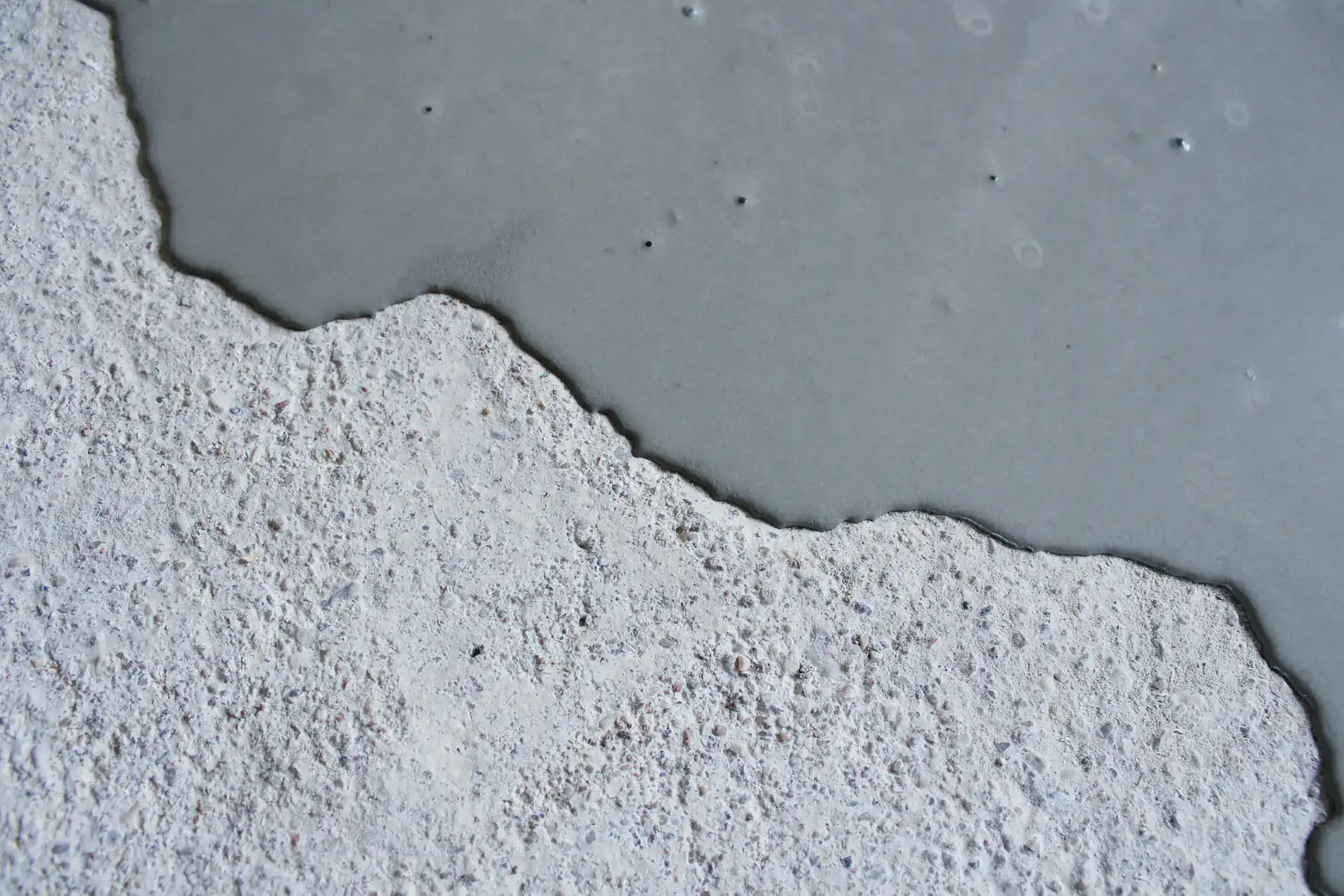
Topical coatings and wax are the most common source of buyer disappointment in this industry. A lot of companies — including general cleaning companies that offer polishing as an add-on — apply a coating or wax over dull marble and call it polished. It looks great for a few weeks. Then foot traffic wears it down, and you’re back where you started, sometimes worse because the coating has worn unevenly and left a patchy surface.
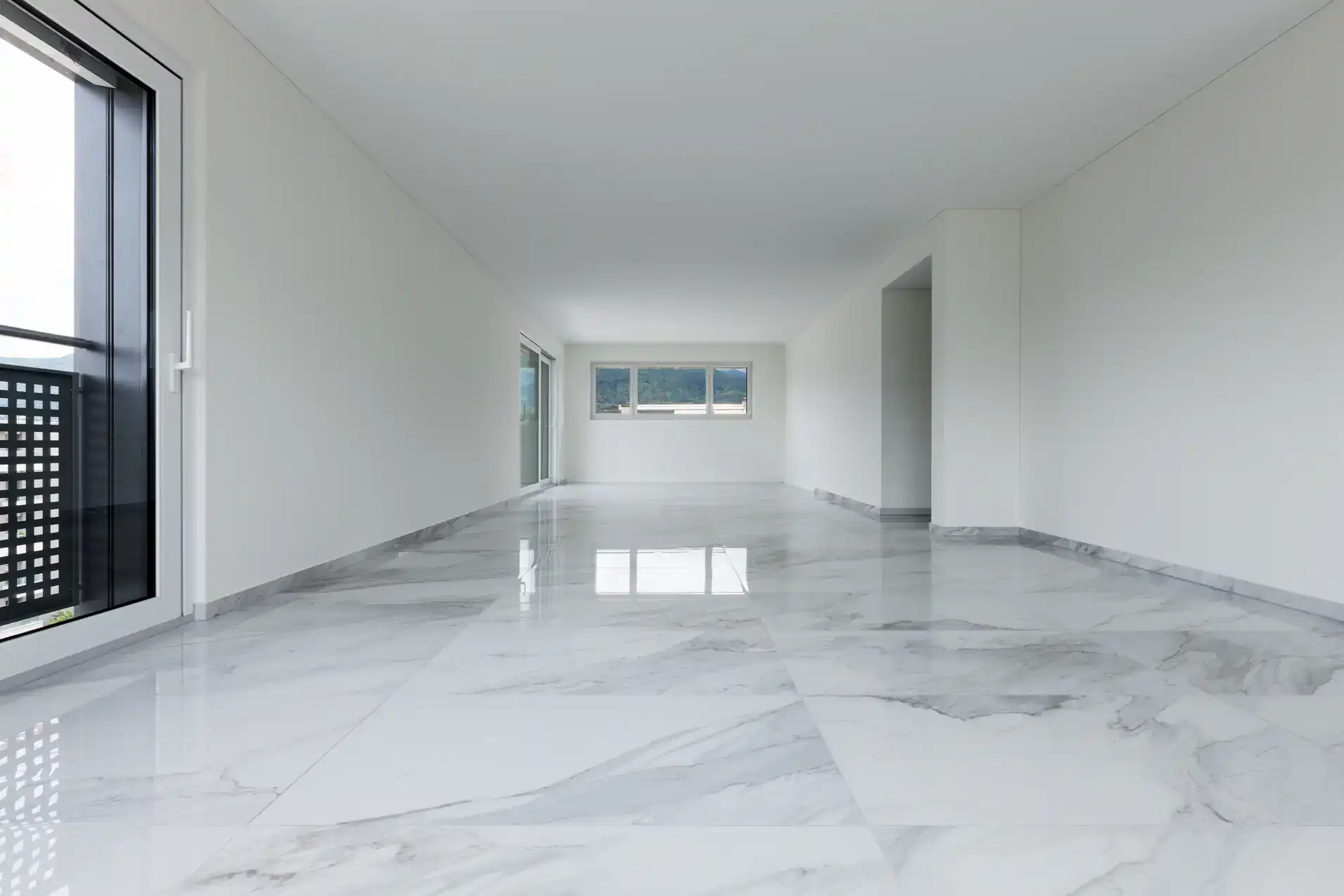
Diamond polishing doesn’t add anything to the stone. We remove the damaged layer and restore the stone’s own surface. That’s why the results last years rather than months, and why it’s the right choice when you’re dealing with actual surface damage — scratches, etching, or dullness that cleaning hasn’t been able to touch. For Long Island, NY homeowners with Carrara or Calacatta marble floors, or for NYC property managers maintaining high-traffic lobby stone, that durability difference has real financial implications.
When to Choose Diamond Polishing Over a Traditional Method
The honest answer is that the right method depends on what your marble actually needs. Diamond polishing is the most thorough option, but it’s not the only option for every situation. Knowing the difference helps you avoid paying for more than you need — or worse, paying for less than your marble actually requires.
If your marble is scratched, etched, or has gone dull from years of use, diamond polishing is the appropriate choice. It’s the only method that mechanically removes surface damage and rebuilds the stone’s reflectivity from within. If your marble is in good condition and you’re just looking to maintain the finish between professional services, a maintenance polish using diamond-impregnated pads may be sufficient.
High-Gloss vs. Honed Finish: Which One Works for Your Space
This is one of the most common questions we get, and the answer isn’t one-size-fits-all. Both finishes are achievable through diamond polishing — the difference is where you stop in the grit sequence.
A high-gloss, mirror-like finish is achieved by continuing through the ultra-fine grit range until the surface reflects light like glass. It’s striking, especially on marble with strong veining like Calacatta or Emperador. The tradeoff is that a high-gloss surface shows fingerprints, water spots, and fine scratches more readily than a matte finish. For a formal dining room or a low-traffic bathroom in a Great Neck or Manhasset home, that’s often an acceptable tradeoff for the visual payoff.
A honed or matte finish stops earlier in the grit sequence, leaving the surface smooth but without the mirror reflection. It’s more forgiving of daily wear, easier to maintain between professional services, and tends to be the preferred choice for high-traffic floors — entryways, kitchens, hallways, and lobby spaces. If you’re managing a building in Midtown or running a restaurant with marble floors in the dining room, honed is usually the more practical choice.
Semi-gloss sits between the two. It offers more reflectivity than honed without the maintenance demands of a full mirror finish. For many residential clients in Long Island, NY communities like Garden City or Roslyn, it ends up being the sweet spot.
One thing worth knowing: the finish isn’t a permanent decision. If you start with a high-gloss finish and decide later that a honed surface better fits how you live in the space, that change can be made in a future service. The stone isn’t locked into anything.
Diamond Polishing vs. Replacement: The Financial Case
For most homeowners and property managers in the NYC and Long Island, NY market, this is the question that actually drives the decision. And the numbers make a strong case for restoration.
Professional marble diamond polishing runs $3 to $8 per square foot. Marble replacement — covering removal of the existing stone, disposal, new material, and installation — typically runs several times that figure per square foot. For a bathroom, a kitchen floor, or a lobby, that difference adds up quickly. We’ve restored bathrooms where the homeowner had already gotten a renovation quote in the range of $12,000 or more. The restoration cost a fraction of that and produced the same visual result.
The financial argument gets even clearer when you factor in durability. A proper diamond polish, followed by a high-quality penetrating sealer applied immediately after, produces results that last years under normal use. A topical coating or wax treatment might look good for two to three months before it starts wearing off — meaning you’re paying for the same service multiple times a year to maintain a result that diamond polishing would have delivered once.
In a market like Long Island, NY, where Nassau County median home prices regularly exceed $700,000, the condition of marble surfaces has a direct impact on property value and first impressions. Sellers in competitive markets like Port Washington, Merrick, and Lawrence routinely schedule marble polishing before listing. The per-square-foot cost of restoration is a rational pre-sale investment when the alternative is a buyer walking away from dull, scratched stone or negotiating the price down.
For commercial properties — hotel lobbies, Class-A office buildings, restaurant dining rooms — the calculus is similar. High-traffic marble that gets properly diamond polished and sealed holds up far longer between services than stone that’s been treated with surface coatings. Over time, that means fewer service calls, less disruption to operations, and a lower total maintenance cost.
Which Marble Polishing Method Is Right for Your Home or Property?
The short version: if your marble has visible damage — scratches, etch marks, dullness that cleaning hasn’t fixed — diamond polishing is the method that actually resolves it. Other approaches can maintain marble that’s already in good shape, but they don’t remove damage. They work around it, and eventually that catches up with you.
The finish you choose, the method you use, and the timing all depend on your specific stone, how the space is used, and what you’re trying to achieve. There’s no universal answer, but there is a right answer for your situation — and it starts with an honest assessment of what your marble actually needs.
If you’re in NYC or anywhere on Long Island, NY and you’re trying to figure out whether your marble needs diamond polishing, a lighter maintenance service, or something else entirely, we’ve been doing this work since 2006. Reach out and we’ll give you a straight answer.
Article details:
- Published by:
- NYC Stone Care
- Published to:
- Last modified:
- October 19, 2026
Share:
Continue learning: