New York, NY 10017

How Commercial Stone Restoration Helps Hotels, Offices, and Retail Spaces Make Better First Impressions in NYC & Long Island
A dull lobby floor isn't just an eyesore — it's quietly costing your business. Here's what commercial stone restoration actually does and why it matters.
Share:
Summary:
Your lobby says something before anyone on your staff does. If the marble floor is dull, scratched, or visibly worn, that’s the first impression — and in a competitive market like New York City or Long Island, first impressions carry real weight.
The frustrating part is that most property managers already know something’s wrong. They just don’t always know why standard cleaning isn’t fixing it, or what actually will.
This post walks through what commercial stone restoration involves, what it costs your business to ignore it, and how a consistent maintenance approach keeps your floors looking the way they should — year after year.
What Commercial Stone Restoration Actually Involves
Stone restoration isn’t a deeper clean. It’s a fundamentally different process.
When marble, granite, travertine, or limestone loses its finish, the damage isn’t sitting on top of the surface — it’s in the surface. Scratches, etching from acidic spills, and dullness from years of foot traffic are physical changes to the stone that no cleaning product or janitorial service can reverse.
Professional restoration uses diamond grinding and progressive polishing to remove that damaged layer and bring the stone back to its original finish. Depending on the stone and the condition, a technician might hone the surface first — creating a smooth, matte result — before moving to a high-gloss polish. The process ends with a commercial-grade sealer that protects the restored surface from future damage.
Why Cleaning Alone Won't Fix a Worn Stone Floor
This is the misconception we run into most often. A property manager notices the lobby floor has lost its shine, so they ask the cleaning crew to buff it more frequently or try a different product. Weeks pass. Nothing improves. Sometimes it looks worse.
The reason is straightforward: cleaning removes surface dirt. It doesn’t remove scratches or reverse etching. Once the stone’s surface has been physically altered — by grit tracked in from outside, by acidic liquids, by years of high-heel traffic — the only way to restore it is to mechanically resurface it. That requires specialized equipment and trained technicians, not a mop and a commercial floor cleaner.
In NYC and Long Island, this problem compounds fast. Think about what a Manhattan office lobby or a Midtown hotel entrance sees every day — thousands of visitors, delivery carts, wet shoes carrying road salt and grit from November through March. Long Island commercial properties along LIRR commuter corridors in places like Hicksville and Garden City face similar wear, just at a different scale. The damage is constant and cumulative.
The longer it goes unaddressed, the deeper it goes — which means more work and higher cost when restoration finally happens.
There’s also a common assumption that if the floors look bad enough, replacement is the only realistic option. That’s rarely true. Most structurally sound stone — even stone in genuinely poor condition — can be restored to a like-new appearance. The surface damage that makes floors look worn is almost always reversible. What can’t be undone is the expense and disruption of tearing out and replacing stone that didn’t need to go anywhere.
Some contractors offer stone polishing as an add-on to carpet cleaning or general janitorial services. Without the right equipment and stone-specific training, these services often produce temporary results at best — and at worst, they cause damage that makes real restoration harder. When you’re dealing with a hotel lobby or a corporate office floor, that’s not a risk worth taking.
How Overnight and Weekend Scheduling Makes Restoration Possible in Occupied Buildings
The single biggest concern we hear from commercial clients isn’t cost — it’s disruption. A hotel can’t close its lobby. A law firm can’t ask clients to walk around construction equipment. A retail space in Nassau County can’t put a “closed for restoration” sign on the door and hope customers come back next week.
This is why commercial stone restoration, done properly, is built around your schedule — not the other way around. We work overnight shifts, weekends, and in phases that keep sections of your property fully accessible while work is in progress. Guests, tenants, and customers often have no idea the work is happening at all.
Professional commercial restoration connects all grinding and polishing equipment to HEPA vacuum systems for continuous dust containment. There’s no cloud of debris settling on your furniture or reception desk. The process is cleaner than most people expect.
For larger commercial projects — a hotel with multiple floors, an office building with a lobby and corridor system, a retail space with significant square footage — phased restoration is the standard approach. We assess the full scope, prioritize the highest-visibility areas, and work through the project in a sequence that keeps the property operational throughout. This approach only makes sense if you’ve done it at scale before. We’ve been doing exactly this across NYC and Long Island for over 15 years, across hundreds of commercial properties.
Commercial property managers and building owners need contractors who carry proper insurance and can provide certificates of insurance before stepping foot in the building. That’s a non-negotiable for most commercial properties, and it should be — it’s part of what separates professional commercial operators from residential companies that occasionally take on larger jobs.
The Real Cost of Ignoring Stone Maintenance in Commercial Properties
Worn stone floors aren’t just an aesthetic problem. They’re a business problem. In a competitive commercial real estate market — and both NYC and Long Island are deeply competitive right now — the condition of your building’s common areas directly affects how tenants, guests, and customers experience your property.
Trophy Class A office buildings in Manhattan are seeing vacancy rates approach single digits. Long Island’s office leasing hit its highest quarterly total in two years in mid-2025. Retail vacancy in Nassau County has dropped to 5.7%. In a market that active, building presentation is a real differentiator. A polished lobby signals that ownership takes the property seriously. A dull, scratched one signals the opposite.
Restoration vs. Replacement: What the Numbers Actually Look Like
When property managers start getting replacement quotes for large stone floors, the numbers are often jarring. New natural stone flooring runs anywhere from $15 to $40 or more per square foot once you factor in demolition, disposal, fabrication, and installation. For a 5,000 square foot hotel lobby, that’s a capital project — one that requires ownership approval, weeks of closure, and the near-impossible task of matching existing stone.
Professional restoration runs a fraction of that. And beyond the direct cost savings, restoration avoids the operational disruption that replacement inevitably brings. There’s no demo. No disposal. No weeks of closure. Restoration happens overnight while your building runs normally.
There’s also a sustainability angle that’s increasingly relevant for NYC property owners specifically. Under Local Law 97, large buildings in New York City are now required to meet stringent emissions standards. Restoring existing stone — rather than quarrying, fabricating, shipping, and disposing of new material — aligns with those sustainability goals in a way that replacement simply doesn’t. It’s not the primary reason most clients choose restoration, but for building owners navigating LL97 compliance, it’s a legitimate secondary benefit worth knowing.
A professionally restored stone floor, sealed with a commercial-grade product designed for high-traffic environments, maintains its finish for years. That’s not a temporary fix — it’s a multi-year investment in your property’s appearance and functionality. Compare that to topical waxes or surface buffs that some contractors apply as a quick solution: those degrade quickly, yellow over time, trap dirt, and ultimately make real restoration more complicated when it eventually becomes unavoidable.
The math consistently favors restoration. And once property managers see it laid out clearly, the decision usually isn’t difficult.
How Routine Stone Maintenance Extends the Life of Your Commercial Floors
Restoration brings a floor back. Maintenance keeps it there. These are two different conversations, and both matter for commercial properties.
A routine stone maintenance program — scheduled cleaning and resealing at regular intervals — dramatically extends the time between full restorations. It also reduces the scope and cost of each restoration when it does happen, because surface damage is addressed before it deepens. For high-traffic commercial environments, this kind of proactive approach is significantly more cost-effective than waiting until the floors look bad and then addressing years of accumulated damage all at once.
For NYC and Long Island properties specifically, the seasonal factor makes maintenance even more important. Winter in this region is hard on stone. Road salt and de-icing chemicals are tracked through commercial entrances from November through March, and those substances are chemically reactive with marble and limestone — they cause etching and surface degradation that accelerates visibly. Properties that address this damage annually, rather than letting it compound over multiple seasons, are in a fundamentally different position by the time spring arrives.
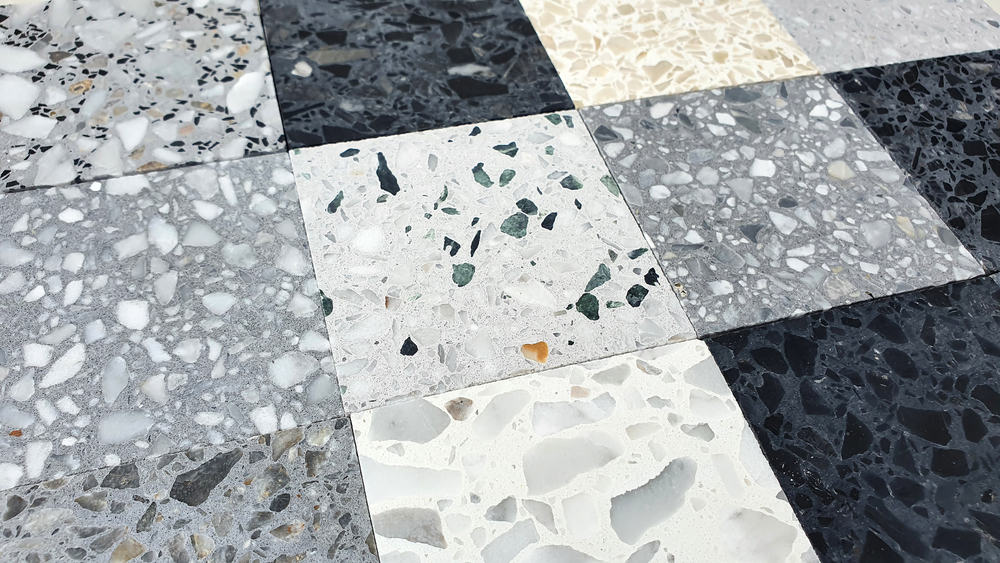
The type of stone matters when thinking about maintenance frequency. Marble and limestone are more reactive and more vulnerable to etching from acidic spills — they typically need more frequent attention in high-traffic environments. Granite is harder and more resistant, but it still benefits from regular sealing to prevent staining and moisture penetration. Terrazzo, which is common in older NYC commercial buildings and government facilities, has its own specific maintenance requirements. A technician who treats all stone the same way isn’t doing the job correctly.
We assess each property individually and recommend a schedule that makes sense for the specific conditions — not a one-size approach that over-services some areas and under-serves others. The goal is to keep your stone looking the way it should, consistently, without the cost and disruption of emergency restoration down the line.
Commercial Stone Restoration in NYC & Long Island: What to Do Next
If your commercial floors have lost their finish, the good news is that the situation is almost certainly recoverable — and almost certainly less disruptive to fix than you’re imagining. The process is built around your schedule. The results last. And the cost compared to replacement is not close.
The key is working with a company that has genuine commercial experience — not a residential operation scaling up, but a team that has done this in hotels, office buildings, retail spaces, and government facilities, with the credentials and insurance to match.
NYC Stone Care has been doing exactly that across New York City and Long Island for over 15 years. If you’re ready to find out what your floors can look like — or just want an honest assessment of where they stand — reach out to us and we’ll take it from there.
Article details:
- Published by:
- NYC Stone Care
- Published to:
- Last modified:
- October 26, 2026
Share:
Continue learning:
