Serving NYC & Long Island
info@nycstonecare.com
24/7 Availability
If your terrazzo floor has lost its shine or started chipping, you are probably wondering if it can be saved, and what that costs.
Share:
Summary:
You have noticed it. The floor that used to catch the light now just looks flat and tired. Maybe there are chips where stone pieces have worked loose, or the surface feels gritty no matter how many times you mop it. If you have original terrazzo in a Manhattan co-op, a mid-century Nassau County home, or a commercial building out in Suffolk County, this is a familiar story.
The good news is that terrazzo is one of the most restorable surfaces out there, and most floors that look like they are beyond saving are not. Here is what you need to know before you call anyone or start pricing out replacement.
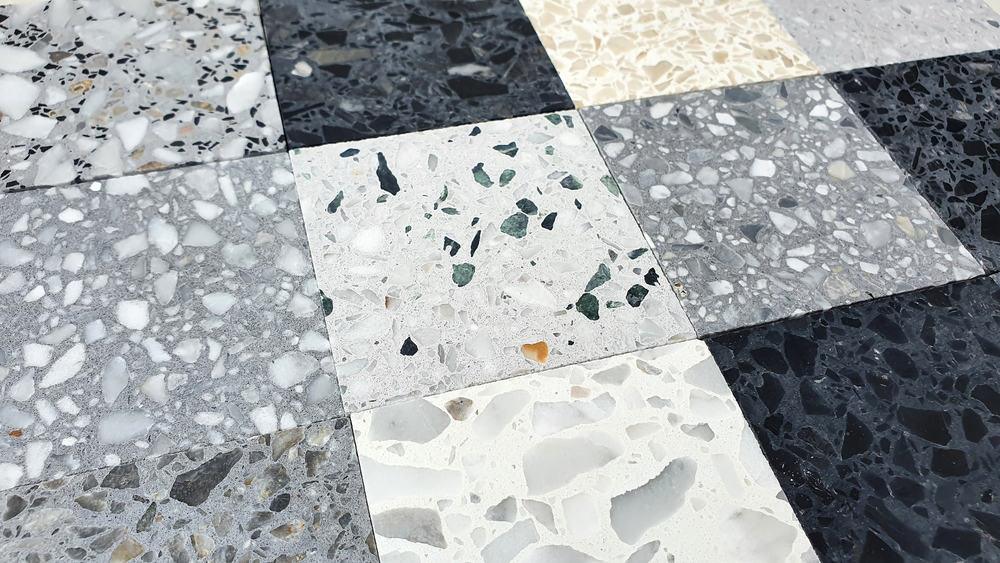
Terrazzo is a man-made stone surface, typically a blend of marble chips set into a cement or epoxy base, then ground and polished flat. It was built for durability, and in thousands of NYC pre-war buildings and Long Island mid-century homes, it has held up for 50, 60, even 80 years. But durability does not mean immune to damage.
The main culprit most people do not expect is chemistry. Terrazzo contains calcite-based aggregates, usually marble, and calcite reacts to acid. That includes citrus-based cleaners, vinegar, wine, and a surprising number of “natural” or “stone-safe” products that are anything but. Every time one of those cleaners hits the surface, it etches the stone slightly, dulling the finish in a way that mopping cannot fix.
Over time, foot traffic, grit, and winter salt tracked in from Long Island roads or Manhattan sidewalks compound the problem. In Suffolk County, seasonal humidity shifts can also cause stress on the stone, leading to hairline cracks that spread if left unaddressed.
This is the question we hear most often. Someone has been cleaning their terrazzo floor regularly, maybe for years, and it just will not come back to life. The surface looks hazy, flat, or perpetually dirty even right after mopping. The reason is that cleaning removes surface-level grime, but it cannot address what has happened to the stone itself.
When terrazzo loses its luster, it is usually because the top layer of the surface has been abraded or etched away. The microscopic texture of the stone has changed, and light no longer reflects off it the way it should. No cleaning product reverses that. Neither does a consumer polishing compound from the hardware store; those products deposit a temporary coating on top of the stone that creates the illusion of shine for a few weeks before breaking down and leaving the surface worse than before.
Professional restoration works differently. The process starts with diamond grinding, using progressively finer abrasive pads to physically remove the damaged surface layer and expose the fresh stone beneath. This is done wet, which keeps dust suppressed and prevents the stone from overheating. Once the surface is properly prepared, the floor is polished through multiple stages until the original depth and clarity come back. What you are seeing at the end is not a coating, it is the stone, polished the way it was when it was first installed.
For Manhattan co-op and condo residents, the wet process matters for another reason. Building boards in pre-war and mid-century buildings often have strict rules about dust and disruption. Wet diamond grinding produces no airborne dust, which means the work can typically proceed without triggering board concerns or requiring unusual accommodations for neighbors.
The difference in results between a professional restoration and a consumer shortcut is significant, not just visually, but in how long it holds. A properly restored and sealed terrazzo floor is easy to maintain with regular dry and wet mopping and does not require frequent professional visits to stay looking good.
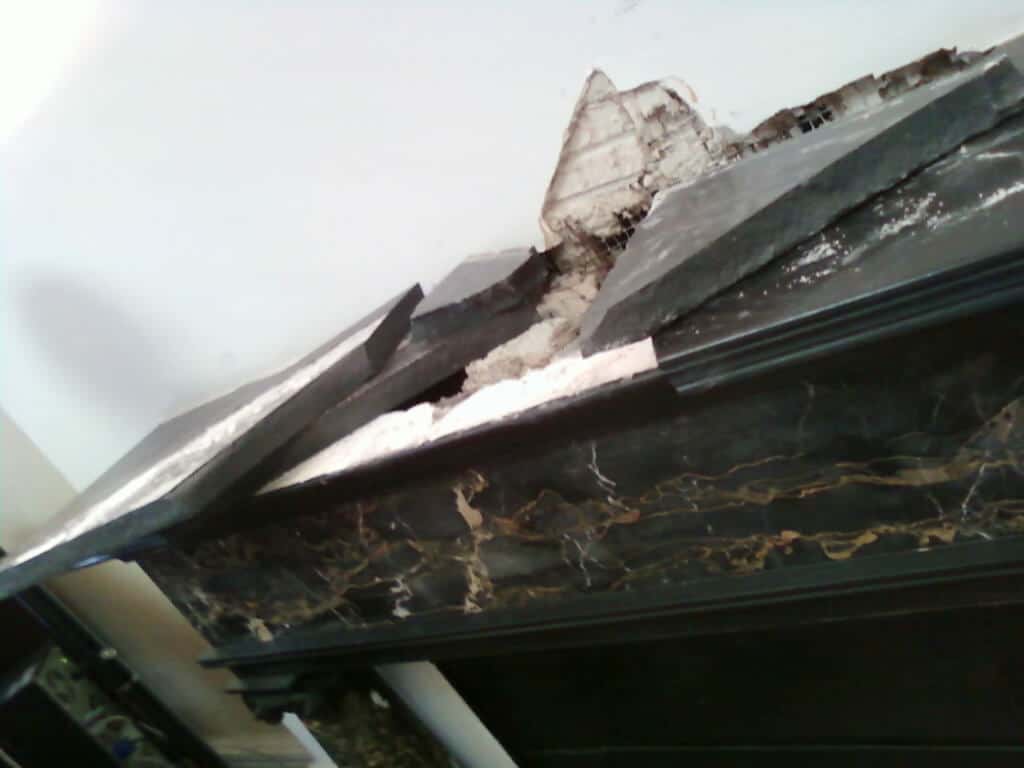
Structural damage, holes where stone chips have come loose, visible cracks, pits in the surface, is often what makes people assume their floor is beyond saving. It looks bad, and it is easy to conclude that the only option is replacement. That conclusion is almost always wrong.
Chip and crack repair is a standard part of professional terrazzo restoration. The process involves filling the damaged areas with a professional-grade filler that is color-matched to the surrounding stone. When done well, the repair is structurally sound and visually seamless, not patched-looking, but genuinely integrated into the surface. After filling, the floor goes through the same diamond grinding and polishing process, which levels everything out and brings the repaired areas flush with the rest of the floor.
This matters a lot in the context of Long Island’s housing stock. Homes built across Nassau County and western Suffolk County during the postwar building boom, the late 1940s through the 1960s, commonly feature original terrazzo in bathrooms, kitchens, and entryways. Those floors are now 60 to 80 years old. Some have chips. Some have cracks from decades of seasonal humidity shifts. Some have both. The age alone does not disqualify them from restoration. The question is condition, and most of what we see is restorable.
The same applies to commercial settings: school hallways in Nassau County, lobby floors in Manhattan office buildings, corridor terrazzo in Suffolk County municipal buildings. These surfaces take far more foot traffic than any residential floor, and they still respond well to professional restoration when the underlying structure is sound. The key is having someone assess the floor properly before any work begins, rather than quoting blind or assuming the worst.
This is where most people’s thinking shifts. Professional terrazzo restoration typically runs between $3 and $8 per square foot. New terrazzo installation (poured) costs between $20 and $70 per square foot. For terrazzo tile, you are looking at $15 to $35 per square foot installed.
Run those numbers on a 500-square-foot lobby or a 200-square-foot residential floor and the gap becomes impossible to ignore. Restoration is not a compromise; it returns the floor to its original condition. It is just a fraction of what replacement costs.
In the Long Island real estate market, this question comes up often. Nassau County and Suffolk County have seen consistent buyer activity, and sellers are always looking for high-return improvements that do not require a full renovation budget. Terrazzo restoration fits that profile well.
Original terrazzo in good condition is a selling point, particularly in mid-century homes where the material is part of the authentic character of the property. A floor that looks dull, chipped, or stained works against you. The same floor, restored, polished, and sealed, looks like a feature rather than a liability. And because restoration costs a fraction of replacement, the return on investment is usually strong.
For homeowners in communities like Garden City, Merrick, Huntington, or Babylon preparing to list a property, it is worth getting a professional assessment before deciding the floor needs to go. In many cases, what looks like a problem is an opportunity. Buyers in these markets are often design-conscious and value original materials; a restored terrazzo floor can be a genuine differentiator in a competitive listing.
The practical side matters too. Restoration work is typically completed in a matter of days, not weeks, and the disruption is minimal compared to a full floor replacement. There is no demolition, no subfloor work, no extended downtime. The floor is cleaned up, the crew leaves, and the surface is ready to be photographed and shown.
One of the things people do not always ask about upfront is what comes after. Restoration brings the floor back, but what keeps it there? The short answer is that properly restored and sealed terrazzo is genuinely low-maintenance. Once the diamond polishing is complete, a penetrative sealer is applied to the surface. Unlike a topical coating, a penetrative sealer works its way into the stone and creates a barrier against moisture, staining, and contaminants from within. It does not sit on top of the floor and peel; it bonds with the material itself. That makes the floor significantly more resistant to the everyday things that caused the damage in the first place.
Day-to-day maintenance is simple: regular dry mopping to remove grit and debris, followed by wet mopping with a pH-neutral cleaner. That last part is important. The single most common mistake after restoration is going back to the same cleaning products that contributed to the problem. Anything acidic (vinegar, citrus-based cleaners, many popular “natural” cleaning solutions) will etch the surface again over time. Stick to pH-neutral products and the floor will hold its finish for years.
For commercial terrazzo in Manhattan lobbies, Nassau County schools, or Suffolk County office buildings, scrubber-drying is the standard maintenance method and works well on a properly restored surface. In high-traffic environments, periodic professional maintenance every one to three years keeps the floor looking its best without requiring a full restoration each time.
The sealer also makes the floor more forgiving of spills. Acid spills (wine, coffee, citrus juice) that would have etched an unsealed surface can be wiped up quickly without leaving permanent damage, as long as they are addressed promptly. The sealer buys time. It is not a reason to be careless, but it does significantly reduce the stakes of everyday accidents.
If you have been living with dull, chipped, or damaged terrazzo and assuming replacement was the only path forward, the main takeaway here is simple: it probably is not. Most terrazzo, even floors that are decades old and visibly worn, can be fully restored for a fraction of what new installation would cost. The process is cleaner, faster, and less disruptive than most people expect.
We have restored over one million square feet of stone across Manhattan and the Tri-State Area, including terrazzo floors in pre-war Manhattan co-ops, mid-century Long Island homes, and commercial buildings throughout Nassau County and Suffolk County. That experience matters when you are dealing with a surface that is irreplaceable and you need to know the people working on it understand what they are doing.
If you want to know what is possible with your floor, the best starting point is a straightforward conversation. Reach out to NYC Stone Care for a free quote; no pressure, just an honest assessment of what your terrazzo needs and what it would take to get it there.
Article details:
Share:
Continue learning: