Serving NYC & Long Island
info@nycstonecare.com
24/7 Availability
Choosing stone flooring in NYC isn't just about looks. Here is how the most popular options hold up under real New York conditions.
Share:
Summary:
If you have ever stood in a Manhattan apartment or a Long Island home and wondered why the stone floors look nothing like they did when the place was new, you are not alone, and you are probably not imagining it. New York is genuinely hard on natural stone. The combination of winter grit, salt tracked in from the streets, hard water, and cleaning products that building staff use without realizing they cause damage adds up fast. Before choosing a new stone floor or deciding what to do with the one you have, it helps to understand which stones survive here and which ones need more attention than you might expect.
Generic “granite vs. marble” comparisons are everywhere. What they fail to account for is the specific environment your floors live in. Stone that performs beautifully in a dry Arizona climate or a low-traffic suburban home behaves very differently in a Manhattan high-rise or a waterfront home on the North Shore of Long Island. In New York City and across Long Island, damage comes from a few predictable sources. Salt and grit tracked in from the streets during winter grind into softer stone surfaces with every step. Hard water leaves mineral deposits that cloud the finish over time. In apartment buildings throughout Manhattan and Nassau County, maintenance staff often clean lobby and hallway floors with commercial products that are not pH-neutral, meaning they actively etch the stone surface every time they clean it. By spring, what looked like minor dullness in October has turned into a surface that no longer reflects light the way it should.
Stone hardness is measured on the Mohs scale, and the difference between a 3 and a 7 is enormous in practical terms. Quartzite sits at approximately Mohs 7 (the hardest common stone used in residential settings) and it combines that hardness with low porosity and heat resistance. It looks similar to marble but behaves more like granite. For NYC buyers who want the visual elegance typically associated with marble without the maintenance demands that come with it, quartzite is worth serious consideration.
Granite lands at Mohs 6 to 7, making it the most durable option for everyday residential use. It resists scratching, handles acidic spills better than softer stones, and does not need to be sealed as frequently. In compact Manhattan kitchens where countertops take daily punishment from cooking, acidic foods, and constant use, granite’s durability means it can handle the intensity without requiring constant professional attention. For Long Island homes in Nassau County communities like Manhasset or Old Westbury, where kitchens tend to be larger and see heavy family use, granite holds up exceptionally well over time.
Marble sits at Mohs 3 to 5, which puts it in a much more vulnerable category. It scratches more easily, etches when it contacts acidic substances, and dulls faster in high-traffic settings. That does not mean marble is a bad choice; it means it is a choice that comes with real maintenance responsibilities. The pre-war buildings on the Upper East Side and Upper West Side are full of original marble lobby floors and limestone entry foyers that are 80 to 100 years old. They have survived this long because they have been properly cared for. The ones that look worn out have usually been cleaned with the wrong products for years.
Travertine and limestone both land at Mohs 3 to 4, making them the most porous and vulnerable of the common stone types. Travertine in particular needs more frequent sealing and is more susceptible to freeze-thaw damage, which matters for any outdoor application in the Northeast. If you have travertine on a Long Island patio or a terrace in a Manhattan building, that stone needs attention before and after every winter, not just when something looks wrong.
French Limestone deserves its own mention because it is common in high-end Manhattan apartments, and it behaves differently from what most people expect when they first see it. It has a beautiful, muted, old-world quality that photographs well and looks stunning in the right setting. However, it stains and chips more easily than marble, which is already on the softer end of the spectrum. If you have French Limestone floors, you already know they need regular attention; chips, stains, and surface wear show up faster than on most other stone types.
The issue we see most often with French Limestone in Manhattan apartments is that owners do not realize how quickly minor damage compounds. A small chip gets ignored. A stain sits for a few days. The surface gets cleaned with a product that is not formulated for limestone. Over time, what started as minor wear turns into a floor that looks significantly older and more damaged than it is. The good news is that French Limestone responds well to professional restoration: color-matched epoxy fills chips cleanly, and the surface can be honed and polished back to a consistent finish. However, the window for easy restoration closes faster with this stone than with harder options, so timing matters.
For anyone choosing stone for a Manhattan renovation and drawn to the look of French Limestone, go in with clear eyes. It is a beautiful stone that rewards attentive maintenance. If you are not prepared to seal it regularly and have it professionally serviced when wear appears, a harder stone will serve you better in the long run. If you love it and are willing to care for it properly, it can look extraordinary for decades. The Upper East Side has buildings that prove it.
One of the most common conversations we have with homeowners in Manhattan and across Nassau and Suffolk Counties starts the same way: they have been quoted a significant amount to renovate a bathroom or kitchen, and they are wondering if there is another option. In most cases, there is.
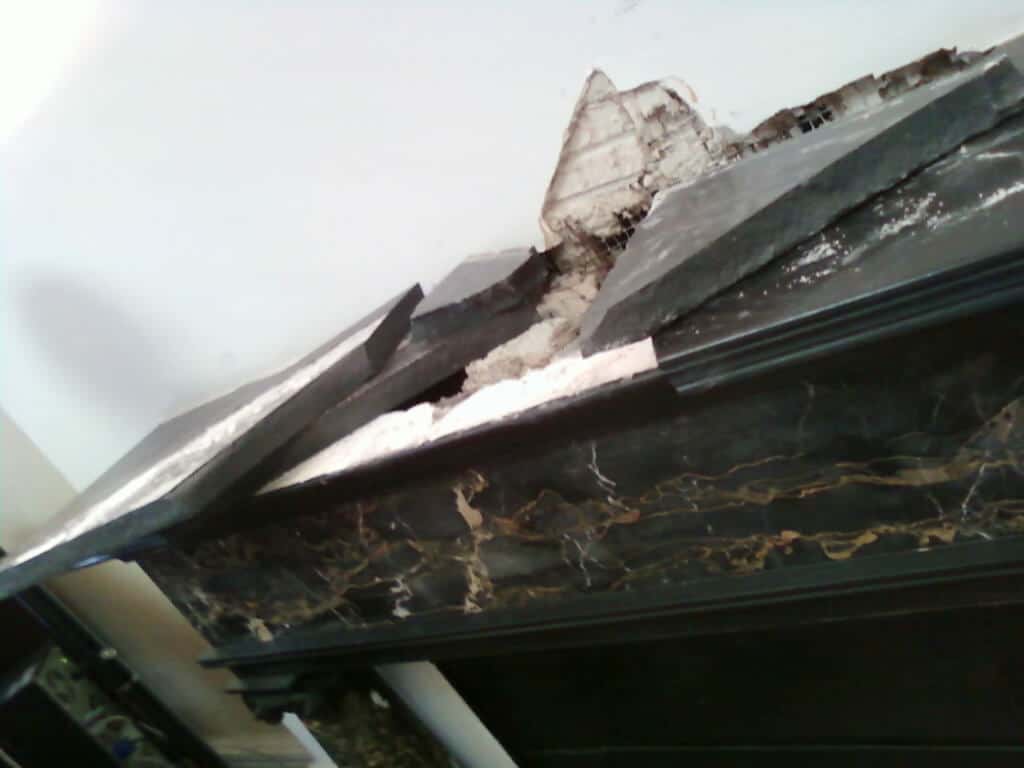
Professional stone restoration, which includes marble polishing, marble repair, granite repair, and full stone restoration depending on what the surface needs, can bring a floor or countertop back to its original condition for a fraction of what full replacement costs. We have worked with homeowners on the Upper East Side who were facing $12,000 or more to remodel a bathroom before discovering that restoration was possible. The results were, in their words, stunning, even though the marble was old and had been through years of wear and neglect.
Yes, and more thoroughly than most people expect. The process depends on the type of stone and the nature of the damage, but the range of fixable issues is wide. Scratches on marble floors are addressed through a combination of honing, which removes surface damage by grinding the stone to a uniform base, and polishing, which restores the reflective finish using industrial diamond pads in progressive grits. For deeper damage, cracks are filled with color-matched epoxy and the surface is ground and honed to blend the repair into the surrounding stone. After polishing, a sealant is applied to protect the restored surface from future damage.
Granite repair follows a different process, which is part of why it is more involved when it does get damaged. Granite’s hardness means scratches are less common, but when they occur, the repair requires specialized techniques distinct from marble restoration. The same is true for chips: a large chunk of a granite countertop can be repaired with color-matched epoxy and refinished to the point where the damage is completely invisible. We have completed repairs like this for clients in Manhattan where the result was exactly that: you could not tell it had ever been broken.
For Long Island homeowners, particularly in the Hamptons and other coastal communities in Suffolk County where properties sometimes sit vacant for extended stretches, stone damage often compounds quietly. A chip in a travertine floor or a crack in a marble vanity that goes unaddressed for months becomes harder to restore cleanly than the same damage caught early. That is why we recommend having stone surfaces assessed after any extended vacancy, especially in coastal environments where humidity and salt air accelerate surface degradation. Stone repair done at the right time is straightforward. Stone repair done after years of neglect is more involved, though usually still far less disruptive than replacement.
The honest answer is more often than most people think, and less often than you would need if you caught problems early. For marble and limestone floors in high-traffic settings, such as a Manhattan apartment entryway, a lobby floor in a co-op building, or a kitchen in a busy Nassau County home, quarterly professional re-polishing and re-honing of surface scratches is the standard that keeps floors looking the way they should. Granite holds up longer between professional visits, typically needing re-polishing every six months to a year for heavy-traffic areas.
The frequency question matters because the alternative to regular maintenance is not “no maintenance”; it is reactive restoration after significant damage has accumulated. A building manager who calls for stone care only when the lobby floor visibly deteriorates is looking at a much larger job than one who schedules consistent upkeep. The same logic applies to residential settings. Sealing stone floors regularly (the frequency depends on the stone type and how much traffic it sees) is the single most effective thing you can do between professional visits to slow the rate of damage.
What we consistently see in Long Island homes, particularly in waterfront communities along the Great South Bay and the North Shore in Suffolk County, is that coastal humidity and salt air create a layer of environmental stress that accelerates surface degradation on marble and other natural stone. Homes in these areas benefit from more frequent sealing than comparable inland properties. For Hamptons homeowners whose properties are seasonal, we recommend a professional assessment and sealing before closing up for the off-season and again when you return in spring, not because something necessarily looks wrong, but because conditions during those months are when damage quietly accumulates.
If there is one thing this ranking makes clear, it is that durability is not just about the stone: it is about the stone in your specific environment. Granite and quartzite hold up best under New York conditions. Marble and limestone are beautiful but demand consistent care. French Limestone rewards attentive owners and punishes neglect. Travertine needs more attention than most people realize, especially in coastal Long Island settings.
If you already have stone floors that are not looking the way they should, replacement is rarely the only option. Most damage, including scratches, chips, etching, and dullness, is restorable by a professional who knows what they are doing with the specific stone type in front of them.
We have been doing this work across Manhattan and Long Island for nearly 15 years. If you are dealing with damaged stone or trying to figure out the right path forward for a renovation, reach out to NYC Stone Care for an honest assessment before you commit to anything.
Article details:
Share:
Continue learning: