Serving NYC & Long Island
info@nycstonecare.com
24/7 Availability
Choosing between granite and marble is harder than it looks. Here's what NYC and Long Island homeowners actually need to know before deciding.
Share:
Summary:
You’re standing in a kitchen showroom, or maybe scrolling through renovation photos at midnight, and the question keeps coming up: granite or marble? Both look incredible. Both cost real money. And the wrong choice — for your lifestyle, your kitchen, your building — can mean years of frustration or a surface that never quite lives up to what you imagined.
This isn’t a simple answer, and anyone who tells you otherwise is skipping the parts that matter. What we can do is walk you through the real differences — durability, maintenance, cost, and how each stone actually performs in a Manhattan apartment or a Long Island home — so you can decide with your eyes open.
At the material level, granite and marble come from completely different geological processes. Granite forms when molten rock cools slowly deep underground, which is why it ends up so dense and hard — typically a 6 to 7 on the Mohs hardness scale. Marble starts as limestone and gets transformed by intense heat and pressure over millions of years, landing around a 3 to 4 on the same scale.
That difference in hardness isn’t just a trivia fact. It explains almost everything: why granite shrugs off scratches that would mark marble, why marble etches when lemon juice or wine sits on it too long, and why the two stones require completely different care. Understanding this upfront saves a lot of grief down the road.
If your kitchen sees real cooking — pots coming off the stove, acidic marinades, the occasional glass of wine that doesn’t quite make it to the counter gently — granite is the more forgiving surface. It resists scratching, handles heat better than most materials, and doesn’t react to the mild acids that are just a normal part of cooking and eating.
That said, “more forgiving” doesn’t mean maintenance-free. Granite still needs to be sealed periodically — typically every one to three years depending on how porous the specific stone is and how heavily the surface gets used. If you skip sealing, granite becomes vulnerable to staining, and some stains in unsealed stone are genuinely difficult to remove. Even acidic liquids like orange juice or coffee, if left sitting long enough, can dull or etch the surface over time.
Chips and cracks do happen, especially on edges or in areas where heavy objects get dropped. When they do, professional epoxy repair — color-matched to your specific stone — is the right move. DIY repair kits exist, but the results rarely hold up, and a mismatched repair can look worse than the original damage. We’ve repaired granite countertops in kitchens across Manhattan and Nassau County where homeowners were convinced the whole slab needed to go — and in most cases, our professional repair made the damage completely invisible.
For Manhattan apartments specifically, granite makes a lot of practical sense. NYC kitchens tend to be compact and heavily used, and granite’s durability means it can handle that kind of daily intensity without constant attention. It also holds its own visually — modern granite slabs can be genuinely striking, and the idea that granite is somehow the less glamorous option compared to marble is outdated.
Marble has a quality that’s hard to replicate. The veining, the depth, the way light moves across a honed surface — it’s why architects have been specifying it for centuries, and why it still shows up in the most expensive apartments on the Upper East Side and in Hamptons homes that cost more per square foot than most people’s entire houses.
But marble is softer, more porous, and more reactive than granite. Acidic substances etch it — not stain it, etch it, meaning they chemically alter the surface and leave dull marks that don’t wipe away. Lemon juice, vinegar, wine, coffee, even certain cleaning products will do it. If you have marble countertops and you cook regularly, you’ll encounter etching. It’s not a question of if.
The good news is that etching, scratching, and general dullness are not permanent. Marble can be professionally restored through honing and polishing — a process that removes the damaged surface layer and brings the stone back to its original finish. We’ve restored marble in Manhattan co-ops and Long Island homes where owners were convinced the stone was ruined. It wasn’t. What looked like permanent damage was, in most cases, entirely reversible.
Marble also needs regular sealing, and it needs the right sealant applied correctly. The wrong product — or a product applied to a surface that wasn’t properly cleaned first — can cloud the stone or create uneven absorption. This is one of the more common mistakes we see when homeowners try to maintain marble themselves or hire a general cleaning company that doesn’t specialize in stone.
For bathrooms, marble remains one of the most compelling choices available. It’s less exposed to the acidic food contact that causes problems in kitchens, and the aesthetic payoff in a well-maintained marble bathroom is significant. Many of our Long Island clients in Nassau and Suffolk County have marble bathrooms that are fifteen or twenty years old and still look exceptional — because they’ve been properly maintained and restored when needed.
Choosing between granite and marble matters most when you’re starting fresh. But many homeowners already have one or the other — and what they really need to know is whether the damage they’re looking at can be fixed without replacing the whole surface.
The answer, in most cases, is yes. Whether it’s a chipped granite countertop edge in a Tribeca kitchen, etched marble floors in a pre-war co-op on the Upper West Side, or dull limestone in a Hamptons bathroom that’s been through too many summers, we can bring surfaces back in ways that genuinely surprise people.

This is one of the questions we hear most often, and the concern behind it is understandable. When a chunk breaks off a granite countertop — especially on an edge or corner — it looks serious. The instinct is to start pricing replacement slabs.
In most cases, that’s not necessary. Our professional granite repair uses color-matched epoxy that’s selected and blended to match your specific stone’s color and pattern. When it’s done right, the repair is essentially invisible. We’ve had customers tell us they genuinely couldn’t find where the break had been after the repair was complete.
The key word there is “done right.” The epoxy needs to be the correct formulation, matched carefully to the stone, applied at the right consistency, and finished flush with the surrounding surface. It’s not a job for a hardware store kit. We’ve repaired granite in kitchens across Manhattan and throughout Nassau County where homeowners had already attempted a DIY fix that made things look worse — and in most of those cases, we were still able to correct the damage and achieve a clean result.
One thing worth knowing: we can also provide survey reports for insurance claims when granite damage is the result of an accident covered under homeowner’s insurance. This is something many homeowners don’t realize is an option, and it can make a meaningful difference in what comes out of pocket.
If your granite has developed color inconsistencies, dull patches, or surface marks from improper sealing or cleaning products, those are also repairable. Our granite restoration — cleaning, correcting the surface, and resealing with the right penetrating sealer — can bring a neglected granite countertop or floor back to a condition that looks close to new.
Marble restoration is a more involved process than granite repair in most cases, because marble’s softness means it accumulates damage differently — and the restoration approach has to match the specific type and degree of damage on your particular stone.
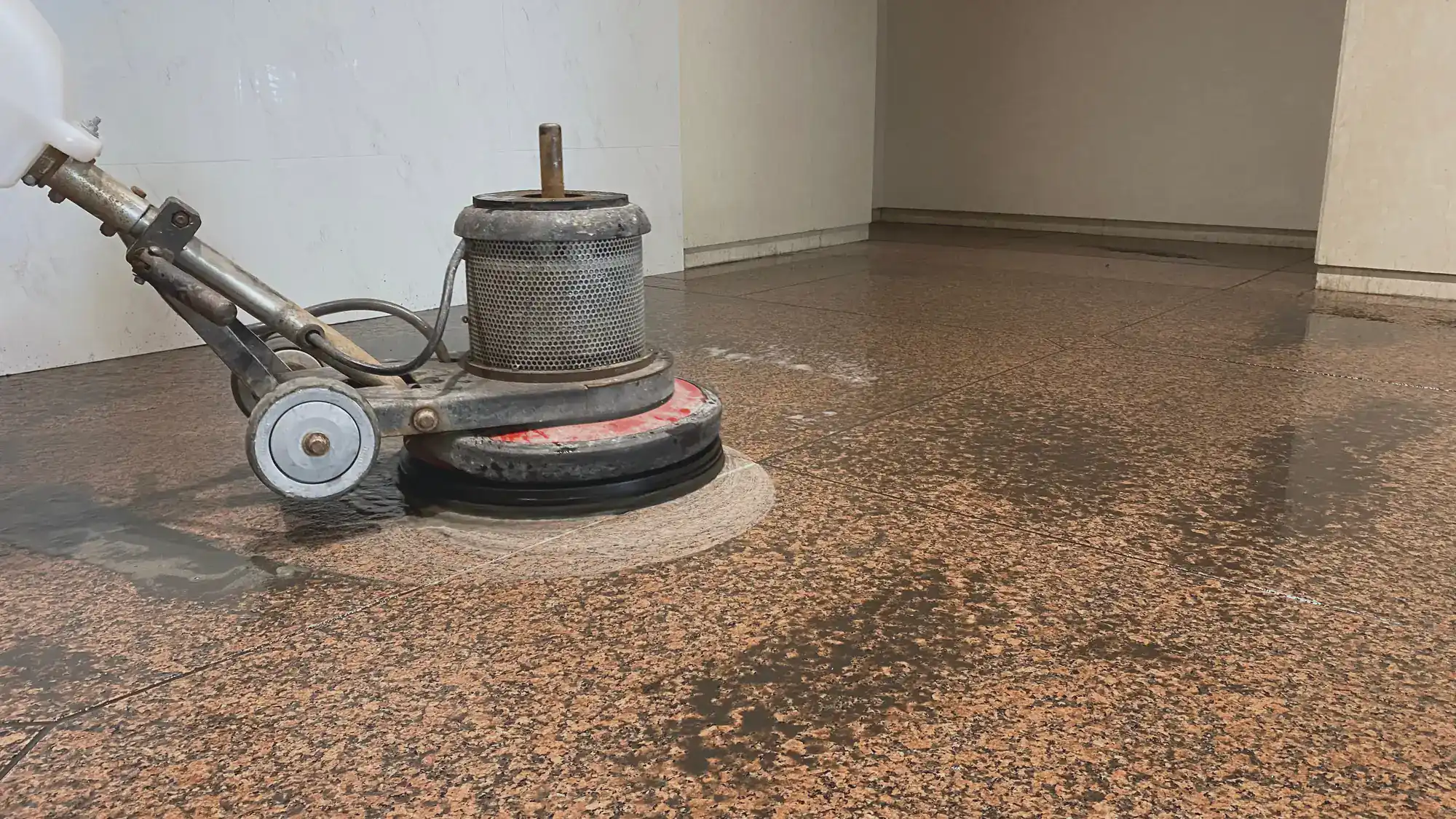
The process typically starts with a thorough cleaning to understand the full scope of what’s happening with the surface. From there, honing removes the damaged surface layer — scratches, etch marks, and dull spots — using progressively finer abrasives. Polishing follows to bring the surface to the desired finish, whether that’s a high gloss or a softer honed look. Sealing is the final step, and it’s not optional — an unprotected marble surface after restoration will re-damage faster than one that’s properly sealed.
For floors, the process is the same but scaled up, and the results can be dramatic. We’ve restored marble floors in Manhattan co-ops and pre-war buildings where the stone had decades of wear, and the finished result looked like new installation. One customer who came to us with a bathroom that had been quoted at $12,000 or more for a full renovation walked away with results she described as “stunningly amazing” — at a fraction of that cost.
This matters in the Manhattan and Long Island market more than most places. In Manhattan, full bathroom renovations in co-op buildings involve board approval, contractor vetting, noise restrictions, and timelines that stretch for weeks. Stone restoration typically requires none of that — it’s non-disruptive, usually completed in a single visit, and produces results that rival what you’d get from ripping everything out and starting over. In Nassau County and across Suffolk County, where homeowners are often preparing properties for sale or seasonal use — particularly in the Hamptons before summer — the speed and cost efficiency of our professional marble polishing and restoration makes it the smarter first call before committing to anything more invasive.
French limestone, which shows up in a lot of high-end Manhattan apartments and Long Island homes, chips and stains more easily than marble and needs the same kind of regular professional attention. If you have it, you know exactly what we’re talking about.
If you’re choosing between granite and marble for a new installation, the honest answer is: it depends on how you live. Granite is harder, lower maintenance, and better suited to kitchens that see heavy daily use. Marble is more visually striking in many applications, particularly bathrooms, but it asks more of you in return.
If you already have one of these stones and it’s showing wear, the more important thing to know is that most damage is fixable. Chips, cracks, etching, dullness, staining — these are problems with professional solutions, not reasons to start a renovation.
We’ve been working with homeowners and property managers across Manhattan, Nassau County, and Suffolk County since 2006, and the call we get most often is from someone who assumed they needed to replace a surface that turned out to be fully restorable. If you’re not sure what you’re dealing with, reach out to us — we’ll give you a straight answer about what’s possible and what it would take to get your stone back to where it should be.
Article details:
Share:
Continue learning: