Serving NYC & Long Island
info@nycstonecare.com
24/7 Availability
Your marble looks dull, scratched, or just off. Before you call a contractor for a full renovation, read this — stone honing might be exactly what you need.
Share:
Summary:
You notice it gradually. The marble in your foyer isn’t catching the light the way it used to. There are faint scratches across the kitchen countertop. A few dull, cloudy patches have appeared in the bathroom that no amount of cleaning seems to fix. You’re not sure if it’s a stain, wear, or something worse — and you’re definitely not sure what to do about it.
Before you start pricing out a full renovation, it’s worth understanding what stone honing actually is. Because in most cases, what your stone needs isn’t replacement. It needs the right process, done by someone who knows what they’re doing.
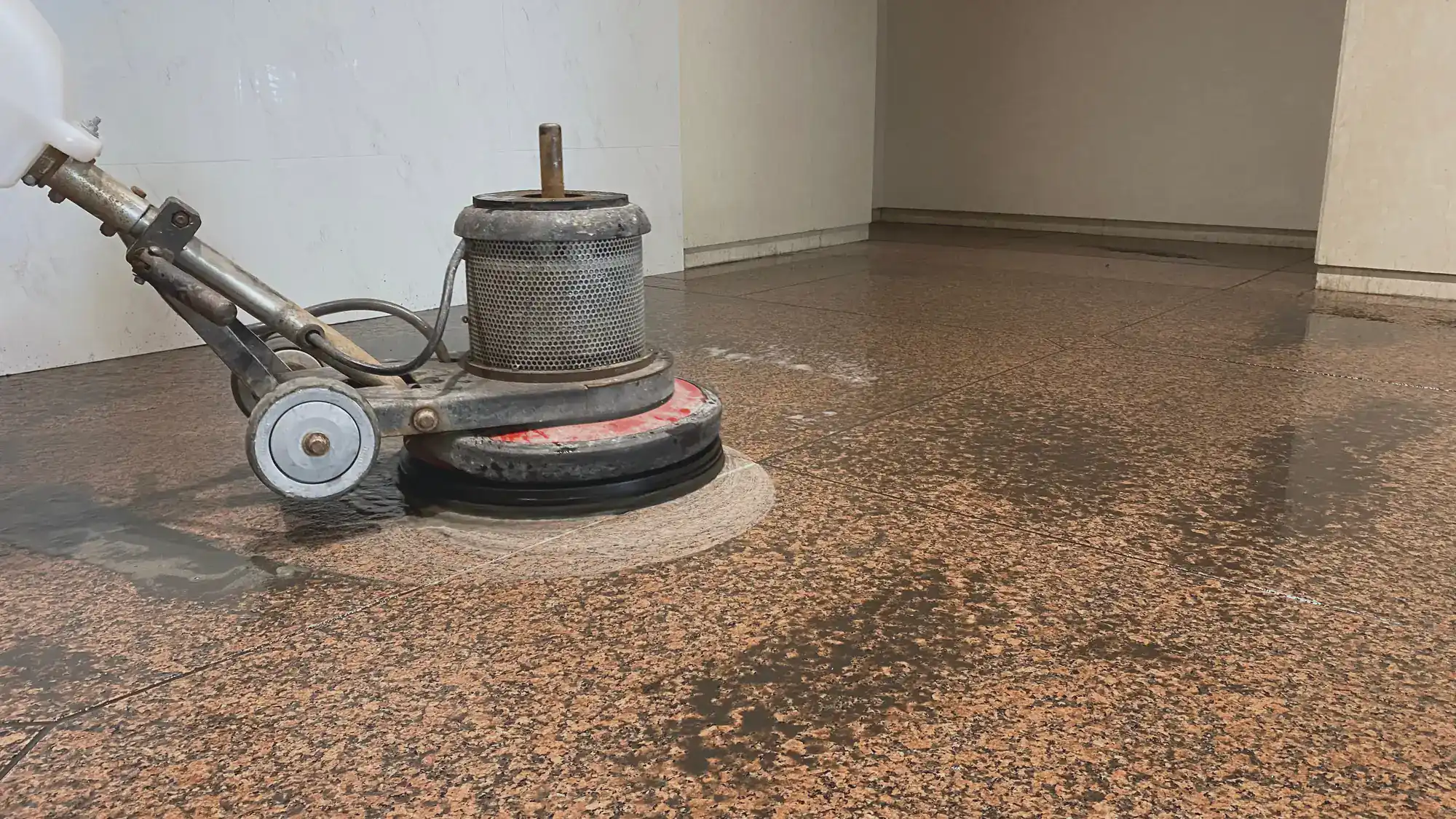
Stone honing is a restoration process that uses progressively finer diamond abrasive pads to remove a thin layer from the surface of natural stone. That removed layer is where the damage lives — the scratches, the etch marks, the dullness. What’s left underneath is fresh, undamaged stone with a smooth, matte or satin finish.
It’s not a coating, a filler, or a surface treatment that wears off in a few months. Honing physically removes the problem. Think of it like sanding a worn hardwood floor — you’re not covering anything up, you’re cutting back to what was always there.
The result is a surface that looks clean, even, and intentional. Not shiny like polished marble, but smooth and refined in a way that holds up well in real daily life.
This is probably the most common question we hear, and it’s a fair one because the two terms get used interchangeably all the time — even by people who should know better.
Honing and polishing are actually two different stages of the same restoration process. Honing comes first. It uses abrasive diamond pads to smooth the stone’s surface and remove damage, leaving behind a matte or satin appearance. The stone looks clean and even, but it doesn’t reflect light with that high-gloss shine. Polishing takes that honed surface and refines it further — using progressively finer abrasives and finishing compounds — until the stone becomes reflective and bright.
So if your goal is a shiny, mirror-like finish, polishing is the final step. But honing is almost always what needs to happen first, especially if there’s any real damage present. Trying to polish over scratches or etch marks without honing them out first is like painting over a wall without fixing the cracks — it might look okay for a week, but it won’t hold.
There’s also a practical reason some homeowners and designers specifically request a honed finish as the end result, with no polishing at all. Honed stone is more slip-resistant than polished stone, which matters on bathroom floors, kitchen floors, and entryways. It also shows fewer fingerprints and water spots in everyday use, which makes it genuinely easier to live with in high-traffic areas. A lot of the marble you see in Manhattan restaurant interiors and hotel lobbies has a honed finish for exactly this reason — it’s beautiful, but it’s built for use.
One important thing to know: honed surfaces are more porous than polished ones, which means sealing after honing isn’t optional. We seal the stone as part of our restoration process. If a contractor doesn’t mention sealing, that’s a red flag worth paying attention to.
This is where a lot of homeowners are surprised by what’s possible. Stone honing can correct a wider range of damage than most people expect — and we can do it without touching the surrounding area, the grout, or any of the adjacent surfaces in your home.
Etch marks are probably the most common problem we see, especially on marble countertops and bathroom surfaces. These are the white, cloudy patches that appear after acidic substances — lemon juice, vinegar, wine, certain cleaning products — come into contact with the stone. They’re not stains. They’re a chemical reaction between the acid and the calcium carbonate in the marble, and scrubbing them harder will not fix them. Honing will. The damaged microscopic layer gets removed, and the surface underneath is clean and even again.
Surface scratches are another one. In Manhattan apartments, marble floors in foyers and hallways take a beating from foot traffic, furniture being moved, and the grit and road salt that gets tracked in every winter. On Long Island, kitchen countertops in active family homes develop fine scratches from daily use over years. Honing removes that scratched layer and restores a consistent surface across the whole area.
Dullness and uneven sheen — where the stone looks flat or patchy rather than consistently finished — is also correctable through stone restoration. This often happens when different sections of a floor or countertop have worn at different rates, or when a previous polish has worn off unevenly.
What honing can’t fix is structural damage — deep cracks, missing chips, or broken edges. Those require repair work before any honing or polishing begins. But in our experience, the vast majority of homeowners who think their stone is “ruined” are dealing with surface-level damage that responds very well to honing. The stone underneath is almost always in better shape than it looks.
New York presents some specific conditions that accelerate stone damage in ways homeowners in other parts of the country don’t deal with at the same scale. Understanding those conditions helps explain why professional stone restoration is such a common need here — and why it matters who you hire.
The combination of dense urban living, older building stock, hard water, and genuinely harsh winters creates a set of circumstances that are tough on natural stone. The good news is that most of the damage those conditions cause is exactly what honing is designed to address.
A significant portion of Manhattan’s most desirable residential buildings — along Park Avenue, Central Park West, Fifth Avenue, Riverside Drive, and throughout the Upper East and West Sides — were built before World War II. Many of them have original marble lobbies, limestone foyers, and marble bathroom suites that are now 80 to 100 years old. That stone is irreplaceable. When it gets damaged, the only responsible option is restoration, not removal.
But it’s not just the pre-war buildings. Marble and stone in newer Manhattan condos and co-ops takes damage from everyday life just like anywhere else — faster, actually, because the spaces are smaller and the surfaces see more concentrated use. A kitchen countertop in a 900-square-foot Tribeca loft gets used more intensively per square foot than almost any suburban kitchen.
There’s also the winter factor. Every year, from roughly November through March, road salt and grit get tracked into buildings across Manhattan. That material is abrasive. On marble lobby floors, foyer stone, and entryway tile, it creates fine scratches that accumulate season after season. By spring, surfaces that were in decent shape the previous fall often need professional attention.
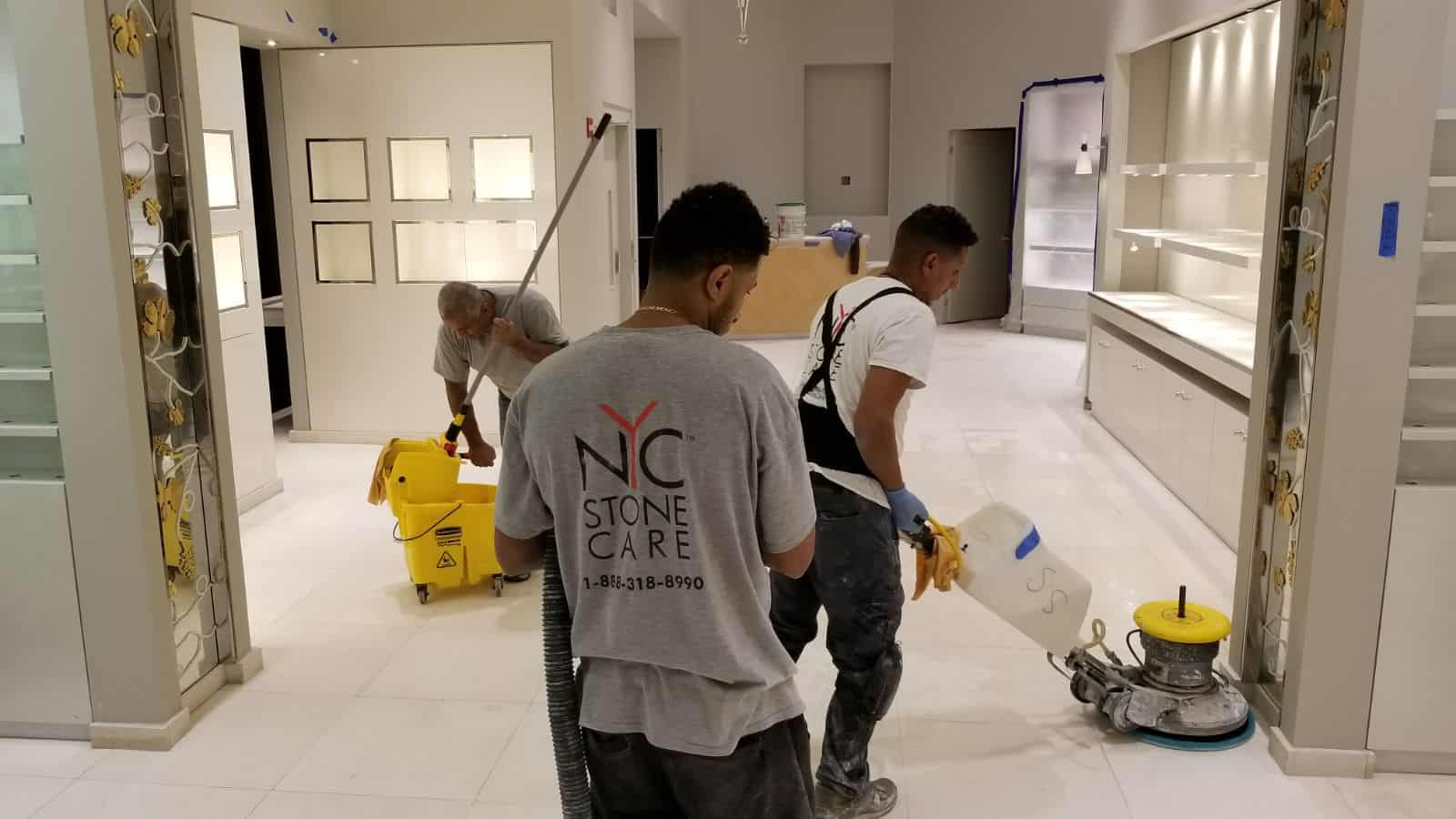
If you live in a co-op or condo, there’s one more thing worth knowing: most buildings require that any contractor working in your unit or in common areas be licensed and insured. We carry both. That matters not just for compliance, but because it protects you if anything goes wrong. It’s worth asking any company you’re considering whether they can actually meet your building’s requirements before you schedule anything.
We’re based in Merrick, in Nassau County — so when we say we know Long Island stone, we mean it in the most literal sense. We work in these homes regularly, and the conditions here are different enough from Manhattan that they’re worth addressing on their own.
Hard water is one of the biggest issues across Nassau and Suffolk Counties. The mineral content in Long Island’s water supply leaves chalky white deposits on marble and stone surfaces in showers, around sinks, and on countertops over time. Those deposits don’t respond to standard cleaning. They require professional treatment, and in many cases, stone honing is part of the solution — removing the mineral-damaged surface layer and restoring a clean, even finish before the stone is properly sealed.
Coastal properties in Suffolk County, particularly along the South Shore, the North Shore, and throughout the Hamptons — Southampton, East Hampton, Bridgehampton, Sag Harbor — face a different challenge. Salt air and ocean humidity are genuinely corrosive to natural stone over time, especially marble and limestone, which are calcium-based and reactive to the compounds in salt air. Homeowners in these communities often find that stone surfaces in bathrooms, kitchens, and outdoor-adjacent spaces need more frequent professional maintenance than they expected when the stone was first installed.
For families in communities like Great Neck, Garden City, Woodbury, Huntington, or Smithtown, the more common story is simply time. A lot of Long Island’s housing stock was built between the 1950s and the 1990s, and the marble or granite that went in during those decades has often never been professionally restored. It’s not ruined — it just needs attention. Stone honing can bring a surface that looks tired and worn back to something that looks genuinely good again, often for a fraction of what a kitchen or bathroom renovation would cost. One of our customers in the area was quoted over $12,000 for a bathroom remodel before we came in and restored the marble for considerably less. The stone looked, in her words, “stunningly amazing.”
That’s not an unusual outcome. It’s actually a pretty common one.
If your marble, granite, limestone, or travertine has lost its finish, picked up scratches, developed etch marks, or just looks consistently dull despite regular cleaning, stone honing is almost certainly worth exploring before you consider anything more drastic. In most cases, the stone itself is in better shape than it appears — it just needs the damaged surface layer removed and the stone properly sealed afterward.
The bigger risk is waiting. Surface damage that responds well to honing today can deepen over time into something that requires more aggressive — and more expensive — grinding work. Early intervention is almost always the more economical choice.
We’ve been restoring stone in Manhattan apartments, Nassau County homes, and Suffolk County estates for over a decade, and the work speaks for itself across 168-plus verified customer reviews. If you’re not sure what your stone needs, reach out to NYC Stone Care for a straight answer and a transparent quote — no pressure, no guesswork.
Article details:
Share:
Continue learning: