
Marble Restoration: Transform Your Floors with Professional Stone Services

Discover how professional marble restoration transforms worn Long Island floors back to stunning, mirror-like surfaces without costly replacement.

Share:

Summary:

Your marble floors once made a statement—elegant, luxurious, timeless. But daily wear has left them dull, scratched, or stained. Professional marble restoration brings back that original beauty through proven techniques like grinding, honing, and crystallization. You’ll get mirror-like shine, enhanced durability, and increased property value at a fraction of replacement cost.
Table of contents
Those beautiful marble floors that once caught every visitor’s eye? They’re still there under all that wear and tear. You don’t need to live with dull, scratched, or stained marble—and you definitely don’t need to replace it entirely.Professional marble restoration transforms your worn surfaces back to their original glory using specialized techniques that remove damage and restore that coveted mirror-like shine. Here’s what you need to know about bringing your marble back to life.

What Is Marble Restoration and How Does It Work

Marble Restoration involves removal of scratches, dull spots, and other blemishes from the surface through an abrasive process known as stone grinding. Think of it as revealing a fresh layer of stone underneath all the damage.

Your marble can be damaged by wear, exposure, improper maintenance, wrong cleaning chemicals, scratching, staining, and etching, but almost without exception, these surfaces can be restored to their original condition and shine. The process works because marble’s natural beauty isn’t gone—it’s just hidden.

Professional restoration doesn’t just clean your marble. It actually removes a microscopic layer of damaged stone to reveal the pristine surface beneath, then polishes it to perfection.

The Four-Step Professional Restoration Process

The first step is grinding, also known as lippage removal or flattening. This powerful step removes all ledges and roughness, bringing flatness to marble floors while removing the deepest scratches and stains. Don’t worry—it’s not as harsh as it sounds.

Next comes honing, which smooths the marble floor with industrial diamonds, bringing up more shine while removing scratches and stains for a more uniform appearance. In some cases, honing is all that’s needed to get your stone looking spectacular again.

The third step is polishing, which gives a semi-shining or shining effect using smaller-graded industrial diamonds than honing. This is where you start to see the real transformation.

Finally, buffing or crystallization creates a mirror-like shine through chemical reaction on the marble surface, creating a microfilm that’s more solid and durable, helping preserve the color and brightness. The result? Floors that look better than new.

Why Professional Equipment Makes All the Difference

Our skilled natural stone technicians use small-grade industrial diamonds to effectively achieve shiny polished marble surfaces, with state-of-the-art equipment and technology bringing back the reflective finish. You simply can’t get these results with store-bought products.

DIY marble polishing kits can’t match the results we deliver, which include diamond polishing or honing to restore clarity and remove etching. The difference isn’t just in the tools—it’s in knowing exactly how to use them.

We can perform 99% of all work on-premises and dust-free. Modern methods use water to lubricate the surface during refinishing with grinding tools, keeping all marble shavings trapped in liquid and eventually vacuumed up. No mess, no disruption to your daily routine.

We also understand that different types of marble require different approaches. When dolomite marbles are involved, dry polishing is the superior choice, while wet-polishing dolomitic marbles may not achieve factory-like sheen and can even cause haziness.

Common Marble Problems That Restoration Fixes

Marble surfaces develop scratches from sliding kitchenware, furniture, or outdoor sand brought on shoes, ranging from minor “clouds” to deep gouge lines that make marble look worn and unattractive. These aren’t permanent—they’re fixable.

Etching appears as dull spots caused by acidic substances like citrus juices, vinegar, or wine, while stains occur because marble’s porous nature makes it susceptible to oils, wines, and other pigmented liquids. Heavy foot traffic and regular use cause overall dullness as dirt accumulates.

The good news? Almost without exception, damaged surfaces can be restored to their original condition and shine.

Dealing with Deep Scratches and Etching

For minor scratches, we use medium to high grit industrial diamond pads to refinish the surface. For deeper scratches, we start with coarse grit grinding pads and progressively use finer pads, then buff the stone to achieve a high-gloss look. For scratches deeper than 1/32″, we perform scratch patching with colored epoxy, followed by sanding, polishing and buffing.

Etch removal involves polishing affected areas to remove etches and restore marble’s smooth, uniform appearance. For more serious burns, our refinishing process includes deeper grinding and honing to achieve a spotless shine or smooth honed finish.

What makes our restoration so effective is the systematic approach. The process begins with thorough inspection to identify damage, stains, scratches, or wear, followed by specialized cleaning to remove dirt and contaminants, then repair of cracks or chips using specialized filler or epoxy.

Depending on the stone’s condition, we use various techniques to restore the surface, including honing, grinding, polishing, or buffing to remove scratches, stains, and etches while restoring the stone’s shine. Each step builds on the previous one for comprehensive restoration.

The Importance of Professional Sealing After Restoration

Once the stone surface is restored, sealing with a protective sealer helps prevent future damage or staining. This isn’t optional—it’s essential for maintaining your investment.

Applying a high-quality sealant protects marble from future stains and etching by creating a barrier on the surface, with regular sealing recommended to maintain the stone’s integrity. Think of it as insurance for your newly restored floors.

We use professional-grade sealers like invisible clear resin water-based options that don’t just seal marble—they penetrate deep into the stone creating a hydrophobic surface, while powerful sealers waterproof marble and pull out all colors while adding refined beauty.

Sealing helps defend against future stains, etching, and water spots—especially important for high-traffic kitchens, bathrooms, and dining areas. We use top-tier products to give marble a shield of protection while keeping its natural look intact. The frequency depends on usage, but marble may need sealing every six months to maintain protection.

Why Choose Professional Marble Restoration in Long Island

Restoring marble can increase your property value by up to 25% according to the National Association of Realtors. Restoration allows you to preserve existing surfaces rather than replacing them, which is more eco-friendly and cost-effective.

Marble restoration is a highly skilled job as stone can be ruined easily by inexperienced tradesmen who use extremely harsh abrasives and acids, but when this occurs, we can usually fix the problem, though it costs more to sort out. Getting restoration done right the first time is crucial.

When you’re ready to transform your marble floors back to their original beauty, we bring the expertise and proven results Long Island homeowners trust. Your marble deserves professional care—and you deserve floors that make a statement again.
Summary:

Your marble floors once made a statement—elegant, luxurious, timeless. But daily wear has left them dull, scratched, or stained. Professional marble restoration brings back that original beauty through proven techniques like grinding, honing, and crystallization. You’ll get mirror-like shine, enhanced durability, and increased property value at a fraction of replacement cost.
Table of contents
Those beautiful marble floors that once caught every visitor’s eye? They’re still there under all that wear and tear. You don’t need to live with dull, scratched, or stained marble—and you definitely don’t need to replace it entirely.Professional marble restoration transforms your worn surfaces back to their original glory using specialized techniques that remove damage and restore that coveted mirror-like shine. Here’s what you need to know about bringing your marble back to life.

What Is Marble Restoration and How Does It Work

Marble Restoration involves removal of scratches, dull spots, and other blemishes from the surface through an abrasive process known as stone grinding. Think of it as revealing a fresh layer of stone underneath all the damage.

Your marble can be damaged by wear, exposure, improper maintenance, wrong cleaning chemicals, scratching, staining, and etching, but almost without exception, these surfaces can be restored to their original condition and shine. The process works because marble’s natural beauty isn’t gone—it’s just hidden.

Professional restoration doesn’t just clean your marble. It actually removes a microscopic layer of damaged stone to reveal the pristine surface beneath, then polishes it to perfection.

The Four-Step Professional Restoration Process

The first step is grinding, also known as lippage removal or flattening. This powerful step removes all ledges and roughness, bringing flatness to marble floors while removing the deepest scratches and stains. Don’t worry—it’s not as harsh as it sounds.

Next comes honing, which smooths the marble floor with industrial diamonds, bringing up more shine while removing scratches and stains for a more uniform appearance. In some cases, honing is all that’s needed to get your stone looking spectacular again.

The third step is polishing, which gives a semi-shining or shining effect using smaller-graded industrial diamonds than honing. This is where you start to see the real transformation.

Finally, buffing or crystallization creates a mirror-like shine through chemical reaction on the marble surface, creating a microfilm that’s more solid and durable, helping preserve the color and brightness. The result? Floors that look better than new.

Why Professional Equipment Makes All the Difference

Our skilled natural stone technicians use small-grade industrial diamonds to effectively achieve shiny polished marble surfaces, with state-of-the-art equipment and technology bringing back the reflective finish. You simply can’t get these results with store-bought products.

DIY marble polishing kits can’t match the results we deliver, which include diamond polishing or honing to restore clarity and remove etching. The difference isn’t just in the tools—it’s in knowing exactly how to use them.

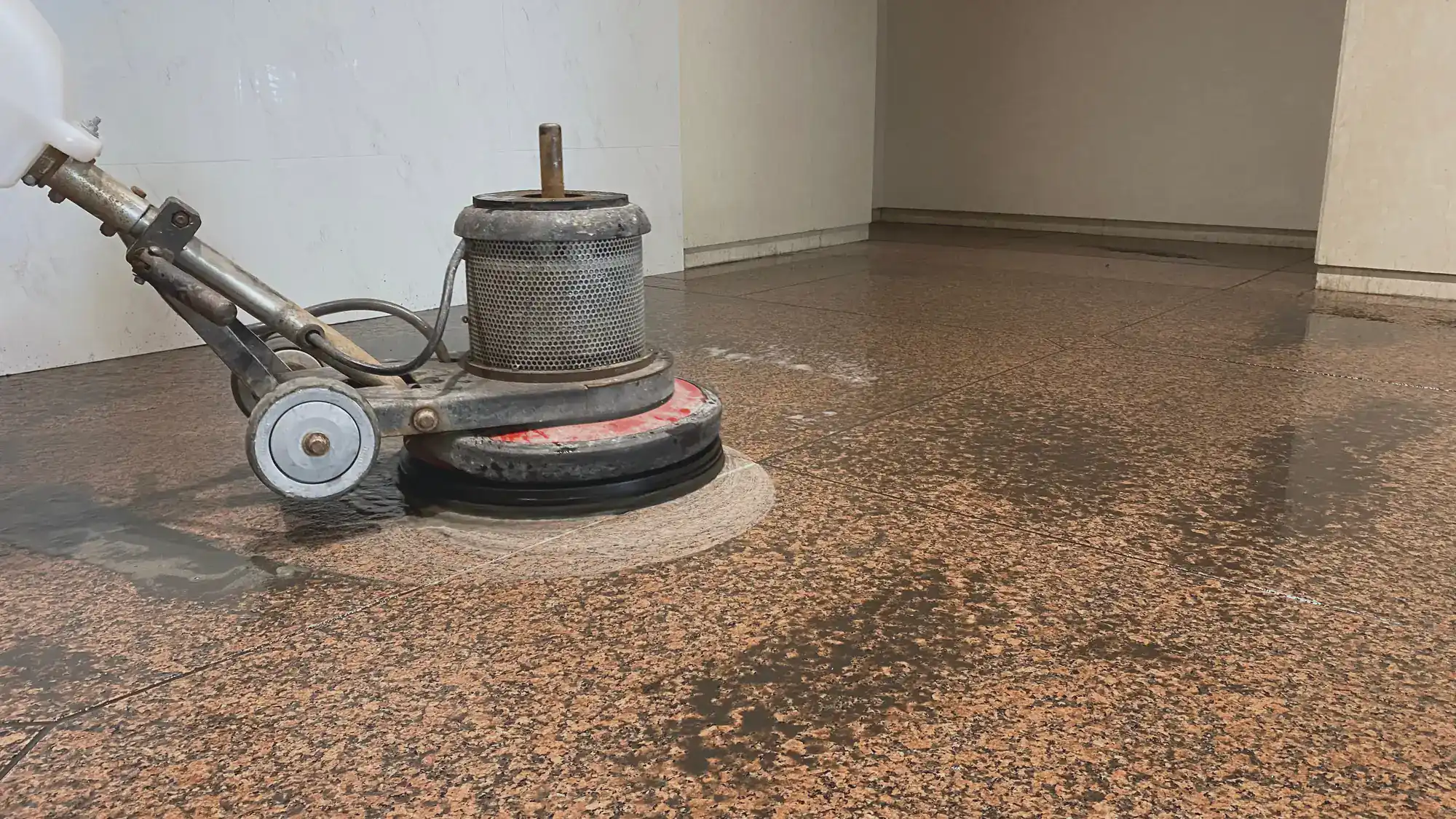
We can perform 99% of all work on-premises and dust-free. Modern methods use water to lubricate the surface during refinishing with grinding tools, keeping all marble shavings trapped in liquid and eventually vacuumed up. No mess, no disruption to your daily routine.

We also understand that different types of marble require different approaches. When dolomite marbles are involved, dry polishing is the superior choice, while wet-polishing dolomitic marbles may not achieve factory-like sheen and can even cause haziness.

Common Marble Problems That Restoration Fixes

Marble surfaces develop scratches from sliding kitchenware, furniture, or outdoor sand brought on shoes, ranging from minor “clouds” to deep gouge lines that make marble look worn and unattractive. These aren’t permanent—they’re fixable.

Etching appears as dull spots caused by acidic substances like citrus juices, vinegar, or wine, while stains occur because marble’s porous nature makes it susceptible to oils, wines, and other pigmented liquids. Heavy foot traffic and regular use cause overall dullness as dirt accumulates.

The good news? Almost without exception, damaged surfaces can be restored to their original condition and shine.

Dealing with Deep Scratches and Etching

For minor scratches, we use medium to high grit industrial diamond pads to refinish the surface. For deeper scratches, we start with coarse grit grinding pads and progressively use finer pads, then buff the stone to achieve a high-gloss look. For scratches deeper than 1/32″, we perform scratch patching with colored epoxy, followed by sanding, polishing and buffing.

Etch removal involves polishing affected areas to remove etches and restore marble’s smooth, uniform appearance. For more serious burns, our refinishing process includes deeper grinding and honing to achieve a spotless shine or smooth honed finish.

What makes our restoration so effective is the systematic approach. The process begins with thorough inspection to identify damage, stains, scratches, or wear, followed by specialized cleaning to remove dirt and contaminants, then repair of cracks or chips using specialized filler or epoxy.

Depending on the stone’s condition, we use various techniques to restore the surface, including honing, grinding, polishing, or buffing to remove scratches, stains, and etches while restoring the stone’s shine. Each step builds on the previous one for comprehensive restoration.

The Importance of Professional Sealing After Restoration

Once the stone surface is restored, sealing with a protective sealer helps prevent future damage or staining. This isn’t optional—it’s essential for maintaining your investment.

Applying a high-quality sealant protects marble from future stains and etching by creating a barrier on the surface, with regular sealing recommended to maintain the stone’s integrity. Think of it as insurance for your newly restored floors.

We use professional-grade sealers like invisible clear resin water-based options that don’t just seal marble—they penetrate deep into the stone creating a hydrophobic surface, while powerful sealers waterproof marble and pull out all colors while adding refined beauty.

Sealing helps defend against future stains, etching, and water spots—especially important for high-traffic kitchens, bathrooms, and dining areas. We use top-tier products to give marble a shield of protection while keeping its natural look intact. The frequency depends on usage, but marble may need sealing every six months to maintain protection.

Why Choose Professional Marble Restoration in Long Island

Restoring marble can increase your property value by up to 25% according to the National Association of Realtors. Restoration allows you to preserve existing surfaces rather than replacing them, which is more eco-friendly and cost-effective.

Marble restoration is a highly skilled job as stone can be ruined easily by inexperienced tradesmen who use extremely harsh abrasives and acids, but when this occurs, we can usually fix the problem, though it costs more to sort out. Getting restoration done right the first time is crucial.

When you’re ready to transform your marble floors back to their original beauty, we bring the expertise and proven results Long Island homeowners trust. Your marble deserves professional care—and you deserve floors that make a statement again.
Article details:

Share:

Pin It on Pinterest