Serving NYC & Long Island
info@nycstonecare.com
24/7 Availability
That dull spot on your marble is not a stain. Here is what is happening to your stone, and what it takes to fix it properly.
Share:
Summary:
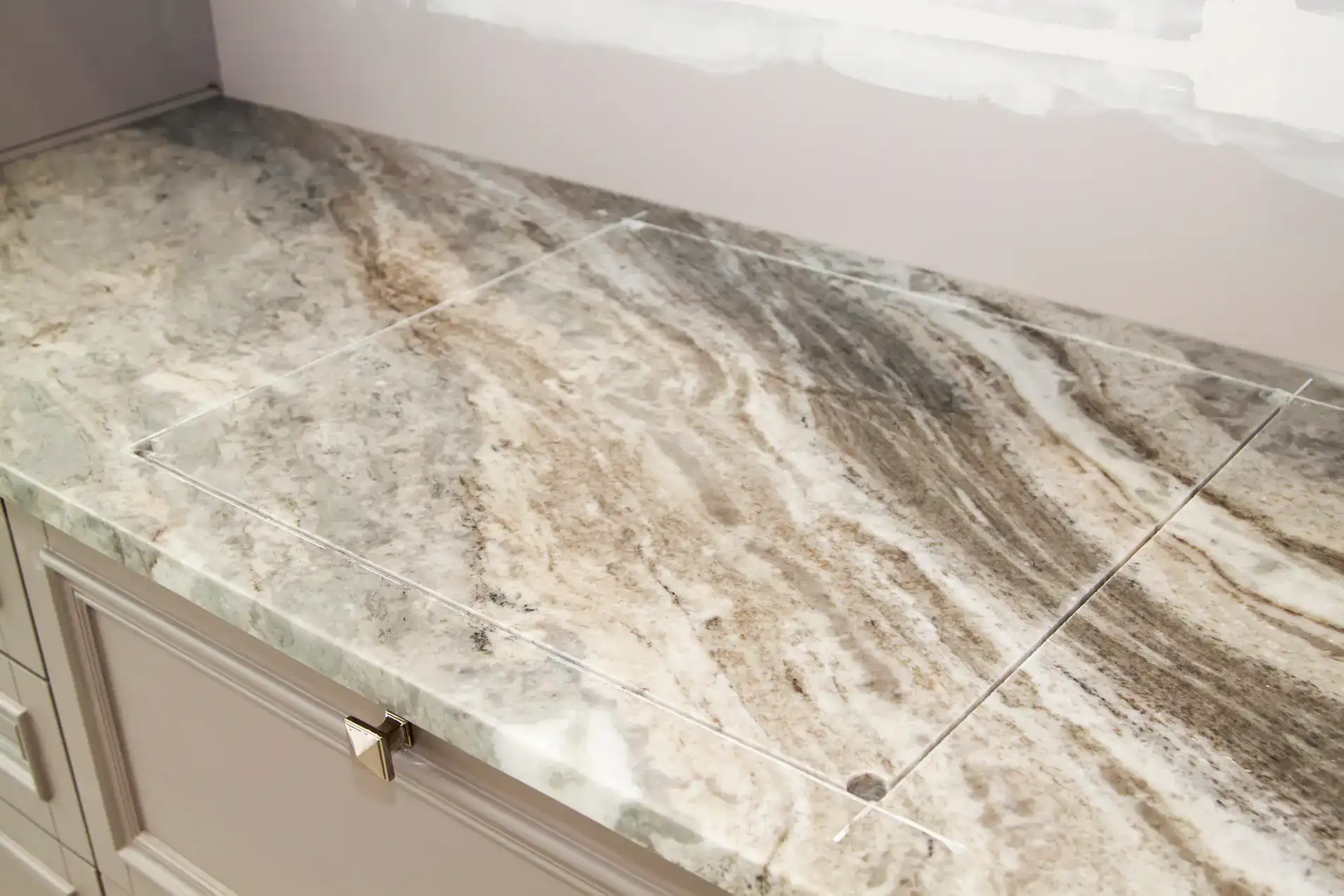
You notice a dull ring on your marble countertop. You wipe it. You scrub it. You try a different cleaner. Nothing works, and now you are wondering if you have somehow ruined a very expensive surface. Here is the thing: you are not dealing with a stain. What you are looking at is an etch mark, and no amount of cleaning will touch it because it is not sitting on the surface; it is in it. Understanding the difference between a stain and an etch mark changes everything about how you approach the fix. Let us walk through what is happening, what makes it worse, and what it takes to genuinely restore your stone.
Etching is a chemical reaction. When an acidic substance comes into contact with natural stone that contains calcium carbonate (marble, limestone, and travertine being the most common) the acid eats into the surface of the stone itself. The result is a dull, hazy spot, sometimes shaped like a ring or a splash, that looks lighter than the surrounding stone and feels slightly rough to the touch.
The most common culprits are things you would find in any kitchen: lemon juice, vinegar, wine, coffee, soda, and tomato-based foods. Harsh cleaning products are just as guilty; anything with bleach, citrus, or vinegar can cause the same reaction. The damage does not always show up immediately, but if an acidic liquid sits on the surface for any length of time, the result is almost always an etch mark.
This is the part that surprises most people, and honestly, it is one of the most important things to understand before you do anything to your stone. Sealing your countertop protects it from staining. It creates a barrier that slows down liquid absorption into the pores of the stone, which helps prevent things like oil or colored liquids from leaving a permanent dark mark. But sealing does nothing to stop etching.
Etching is not about absorption. It is a surface-level chemical reaction between acid and calcium carbonate. The acid does not need to soak in; it just needs to make contact. A sealed marble countertop can be etched just as easily as an unsealed one. This distinction matters because a lot of homeowners in Manhattan co-ops, Nassau County kitchens, and Long Island homes have had their stone professionally sealed and assumed that meant it was fully protected. It is not, at least not from etching.
The practical takeaway is straightforward: the only real way to prevent etching is to prevent acidic contact in the first place. Wipe up spills immediately. Use cutting boards. Keep citrus and vinegar-based dressings away from the stone surface. Use a cleaner with a neutral pH, not an all-purpose spray. These habits matter more than any sealant when it comes to etch prevention. What this also means is that if you already have etch marks, sealing the stone now will not fix them. You need to address the surface damage first, and that is where the restoration process comes in.
The confusion between stains and etch marks is almost universal, and it is understandable, as both show up as discoloration on your stone. But there is a reliable way to tell them apart, and getting this right matters because the repair approach is completely different.
A stain is darker than the surrounding stone. It happens when a liquid absorbs into the pores of the stone and leaves behind a pigment or residue. Oil, coffee, red wine, and rust can all cause staining. A stain sits inside the stone.
An etch mark is lighter than the surrounding stone. It looks like the shine or finish has been stripped away from a specific area, because that is essentially what happened. The acid did not absorb; it reacted with the surface. An etch mark sits on the stone, or more accurately, it is the stone’s surface in a chemically altered state.
If you run your finger over the mark and it feels slightly rough or dull compared to the polished surface around it, that is a strong sign you are dealing with an etch. If the mark feels the same as the rest of the surface but looks darker, you are more likely looking at a stain. Some situations involve both—a spill that etched the surface and left a stain behind—which is why a proper assessment before any treatment is so important.
In Manhattan apartments and Long Island homes with marble and limestone floors, countertops, and shower walls, this kind of misdiagnosis happens constantly. Someone scrubs an etch mark with a stronger and stronger cleaner, not realizing the cleaner itself is making the etching worse. By the time we get involved, there is more damage to address than there would have been originally.
Etch marks cannot be cleaned away, and they cannot be polished out with a consumer product. The repair process requires physically removing the damaged layer of stone and restoring the surface finish, and that takes the right equipment, the right technique, and experience working with the specific stone type in front of you.
The process starts with an assessment. Not every etch mark is the same. A light surface etch on a polished marble countertop is a different job than deep etching across a honed limestone floor. Identifying the severity, the stone type, and the original finish is what determines how we approach the repair.
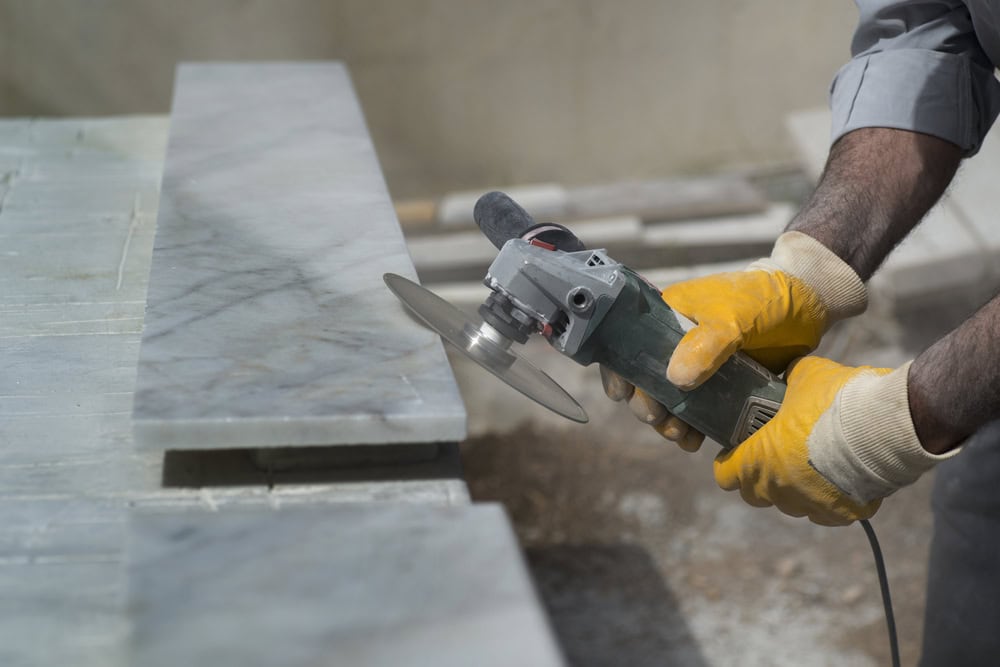
Once the damage is assessed, the repair process for etch marks involves honing (using diamond abrasives to carefully remove the chemically altered layer of the stone) followed by polishing to restore the original finish. For a polished marble countertop, this means bringing the surface back to its original reflective sheen. For a honed surface, it means matching the matte finish of the surrounding stone.
Getting this wrong is obvious. A mismatched finish on a polished countertop is immediately visible, which is why finish-matching is one of the most technically demanding parts of the job. For chips and cracks, which often show up alongside etching on heavily used countertops, we use color-matched filling compounds to fill the damaged area before the surface is ground and polished. When done correctly, the repair is virtually invisible. Our clients consistently tell us they genuinely cannot find the spot that was repaired after the work is done.
After the etch removal and any repair work is complete, sealing is applied to protect the restored surface going forward. This is the right order of operations: restore first, then protect. Sealing a damaged surface does not fix the damage; it just locks it in.
One thing worth addressing directly: DIY etch repair products exist, and some people try them. The risk is real. Uneven abrasion can create low spots in the surface. Incorrect products can cause new etching. Finish mismatches are nearly impossible to correct without professional equipment. We regularly see countertops and floors that needed a straightforward etch repair but arrived in significantly worse shape after a DIY attempt. Stone restoration involves precision, so it is not something where a rough approximation gets you close enough.
Granite is harder than marble (it sits at a 6 to 7 on the Mohs hardness scale, compared to marble’s 3 to 5) and it is significantly more resistant to etching. But “more resistant” does not mean immune. If acidic substances are left on granite for extended periods, etching can still occur. What is more common with granite is surface dulling: the protective polish layer wears down over time from cleaning products, foot traffic (on granite floors), and general use, leaving the surface looking flat and lifeless.
Homeowners in Nassau County and Suffolk County with granite kitchen countertops often assume the dullness is permanent, that the stone has just aged past the point of looking good. In most cases, that is not true. A worn granite surface can be polished back to its original finish, and actual etch marks on granite, while less common, can be addressed the same way they are on marble: through honing and polishing.
The other thing worth knowing is that not all stone labeled as “granite” at the showroom is technically granite. Some materials sold under that name are softer stones that are more vulnerable to etching. If you are not sure what you have, a proper assessment will tell you, and it changes what the repair process looks like.
For homeowners across Long Island, from Great Neck and Garden City in Nassau County to Cold Spring Harbor and the Hamptons in Suffolk County, the variety of stone types in high-end kitchens and bathrooms is enormous. Marble, limestone, travertine, onyx, slate—each one behaves differently and requires a different approach. Working with someone who knows the difference is not optional; it is the whole job.
If you have been living with a dull spot, a hazy ring, or a patch of stone that just does not look right, there is a good chance it is an etch mark, and a good chance it is fixable. The key is getting the right diagnosis before anything else happens. Treating an etch mark like a stain, or reaching for a consumer product that was not designed for your specific stone, can turn a manageable repair into a much bigger job.
We have been doing this work in Manhattan, Nassau County, Suffolk County, and across Long Island for over 15 years. From pre-war marble lobbies in Midtown to granite countertops in Manhasset and limestone bathroom floors in the Hamptons, we have seen the full range of what stone damage looks like, and what it takes to fix it properly. Our clients consistently tell us the restoration cost them a fraction of what a replacement quote came in at.
If you want to know what you are dealing with and what it would take to restore your stone, reach out to NYC Stone Care for a free quote. A quick conversation is usually all it takes to get clarity.
Article details:
Share:
Continue learning: