Serving NYC & Long Island
info@nycstonecare.com
24/7 Availability
Your limestone floor is not dirty. It is damaged, and the product you are using to clean it might be making things worse.
Share:
Summary:
You have cleaned it. You have mopped it. Maybe you have even tried a few different products. And the floor still looks flat, cloudy, or just off. Not dirty, just not the way it used to look.
This is one of the most common frustrations we hear from homeowners across Manhattan, Nassau County, and Suffolk County. And here is the thing: cleaning harder is not going to fix it. In fact, it may be making the problem worse. What you are dealing with almost certainly is not a cleaning issue at all. It is a chemistry issue. And once you understand the difference, the path forward becomes a lot clearer.
Limestone is composed primarily of calcium carbonate. That matters because calcium carbonate reacts chemically with acid, and acid is everywhere in a typical home. Wine, coffee, juice, certain cleaning sprays, even the residue from a vinegar-based floor cleaner can trigger a reaction that physically alters the surface of the stone. This is called etching. It is not a stain sitting on top of the floor. It is a change in the stone itself. The surface becomes microscopically rough, pitted, or uneven, which means it can no longer reflect light the way it should. The result is that dull, cloudy, or patchy appearance that no amount of mopping will touch. Once etching happens, the only way to reverse it is through professional restoration.
This is the part that catches most people off guard. They assume that if a product is labeled “multi-surface cleaner” or even “natural stone cleaner,” it is safe for limestone. It often is not.
Many household cleaners, including popular spray bottles, grout cleaners, and anything with a citrus or vinegar base, are acidic enough to etch limestone on contact. And because the damage is cumulative, you might not notice it after the first use, or the fifth. But over months of regular cleaning, the finish gradually disappears.
We see this constantly in Manhattan apartments, particularly in pre-war buildings on the Upper East Side and Upper West Side where the limestone floors are original to the building, sometimes more than a century old. The homeowner has been doing everything they think is right. They are cleaning regularly, keeping the floor dry, maybe even using a product that says “stone safe” on the label. But the floor keeps looking worse. When we come in and assess it, the culprit is almost always the cleaner.
The same pattern shows up in Nassau County homes in Garden City and Great Neck, and in Long Island properties in Southampton and East Hampton where French limestone floors are especially common. French limestone, that warm, honed, matte-finish stone you see in high-end kitchens and foyers, is beautiful, but it is notably porous and soft. It reacts to acid faster than most other stones, and it shows the damage more visibly.
The fix is not a better cleaning product. The fix is understanding what the stone needs: a pH-neutral cleaner specifically formulated for calcium-based stone, used consistently, and nothing else. But if the damage is already done, no cleaner will undo it. That is where professional restoration comes in.
Etching from acidic cleaners is the most common cause of dull limestone, but it is not the only one. Foot traffic creates micro-scratches across the surface over time, each one too small to see individually but collectively enough to scatter light and kill the floor’s finish. In a busy Manhattan apartment or a Long Island home with kids, this kind of wear accumulates faster than most people realize.
Hard water is another factor that is easy to overlook. NYC and Long Island municipal water supplies leave behind calcium and magnesium deposits on stone surfaces, especially in bathrooms and kitchens where water sits or splashes regularly. Over time, this mineral buildup creates a white haze or cloudiness that looks like the stone has gone dull, because in a way, it has. The surface is obscured, even if the stone beneath is still in good shape.
And then there is winter. From November through March, road salt and de-icing chemicals get tracked in on shoes and boots across Manhattan and throughout Nassau and Suffolk County. These substances are corrosive to limestone. They etch and discolor the surface on contact, and because it happens gradually over an entire season, most homeowners do not connect the dots until spring, when the floor suddenly looks dramatically worse than it did in October.
The important thing to understand is that all of these causes, etching, micro-scratching, mineral deposits, and salt damage, are reversible. None of them mean your floor is ruined or needs to be replaced. They mean the floor needs professional attention, and the sooner you address it, the less work it takes to bring it back.
Most homeowners who call us do not know what they need. They know the floor looks bad. They do not know if they need cleaning, polishing, honing, sealing, or all of the above. That confusion is completely normal, as the terminology is not intuitive, and different companies use the same words to mean different things.
Here is how we approach it. Every job starts with an assessment: what type of limestone, what finish, what kind of damage, and how deep it goes. That determines everything that follows.
There is no one-size-fits-all process, and a company that skips the assessment and goes straight to polishing is likely to produce uneven or inappropriate results.
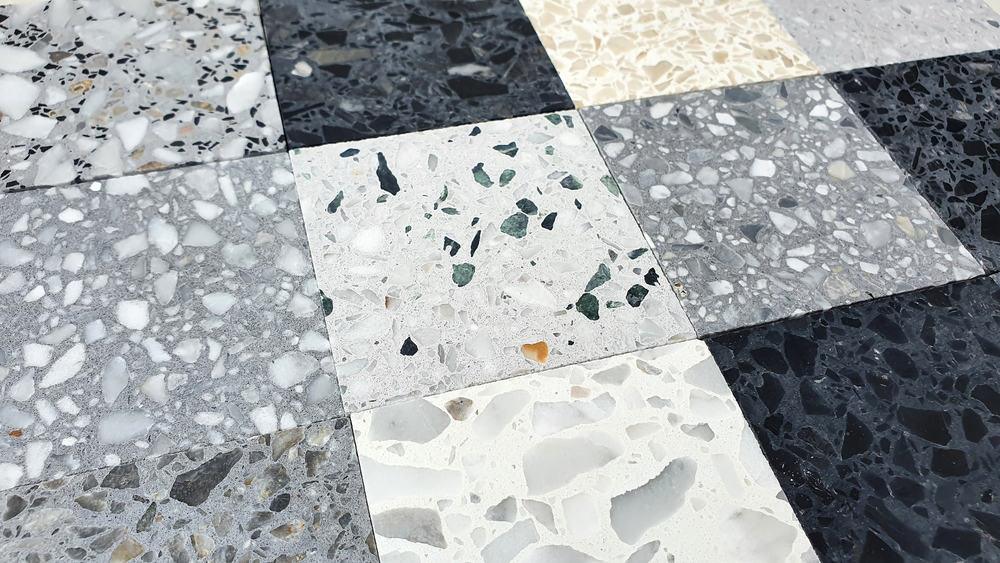
This is something most homeowners, and even some stone care companies, get wrong. The majority of residential limestone floors, including most French limestone installations in Manhattan and Long Island, have a honed finish. Honed means matte or satin, a smooth, flat surface without a high gloss. It is the natural look of the stone, and it is what most people chose when they had the floor installed.
Restoring a honed limestone floor requires a completely different approach than polishing a marble floor. We use diamond abrasive tooling matched to limestone’s specific hardness to grind out the etching and micro-scratches, gradually refining the surface back to a uniform, smooth finish. If we used marble polishing compounds on a honed limestone floor, we would end up with a patchy, uneven surface, or worse, a shine the homeowner never wanted.
After honing, we seal the floor with a penetrating sealer formulated specifically for limestone’s porosity level. Limestone absorbs moisture and staining agents more readily than denser stones like granite, so sealing is not optional, it is a critical part of the restoration. A properly sealed floor is far more resistant to future staining and significantly easier to maintain. We also walk every client through what cleaners to use going forward, because the last thing we want is to see the same floor back in the same condition six months later.
The full process, assessment, honing, refinishing, and sealing, is what separates a professional limestone restoration from a surface-level polish that wears off in a few months. We have restored over one million square feet of natural stone across NYC and the tri-state area, and the results on limestone are consistently some of the most dramatic transformations we produce.
This is the question we hear most often from homeowners who have already gotten a replacement quote and are looking for a second opinion. And it is a fair question. When a floor looks bad enough, the instinct is to assume it is beyond saving.
It almost never is. Even severely etched, stained, or scratched limestone can typically be restored to like-new condition through professional honing and refinishing. We have worked on floors that looked completely destroyed, deep etching, years of accumulated damage, discoloration from winter salt, and brought them back to a finish the homeowner could not believe.
For homeowners in pre-war Manhattan buildings, replacement is not just expensive, it is often not possible. The original limestone in a 1920s Park Avenue co-op or a Central Park West apartment may no longer be quarried in the same variety. And in landmarked buildings subject to NYC Landmarks Preservation Commission guidelines, alterations to original materials can require a level of documentation and approval that makes replacement impractical. Restoration is not just the smarter financial choice in these cases, it is frequently the only realistic one.
For Nassau County homeowners in Manhasset or Old Westbury, and for Long Island property owners who have invested in high-end limestone patios, outdoor terraces, or kitchen floors, the math is similar. A professional restoration followed by regular maintenance extends the life of the floor by decades. The alternative, replacing stone that could have been saved, rarely makes financial sense.
One thing worth knowing: residential limestone surfaces typically benefit from professional attention every three to five years, depending on traffic and maintenance habits. Commercial spaces with high foot traffic may need it more frequently. The key variable is what you are cleaning with day to day. Use the right product consistently, address spills quickly, and a professionally restored limestone floor will hold its finish far longer than most people expect.
If your limestone floor looks dull, cloudy, patchy, or just not the way it used to, you are not imagining it, and you are not out of options. The damage is real, but in almost every case, it is reversible. The first step is stopping whatever is causing it, which usually means switching to a pH-neutral cleaner and keeping acidic substances off the stone entirely.
The second step is getting a professional assessment. Not a quote over the phone based on square footage, an actual look at the stone, the finish, and the type of damage, so the restoration approach is right for your specific floor. That is how we have built a 4.8-star rating across more than 168 verified customer reviews, including from homeowners with French limestone floors in Manhattan and Long Island who have trusted us with irreplaceable stone.
If you are in Manhattan, Nassau County, or Suffolk County and you are ready to find out what your limestone floor can look like again, reach out to NYC Stone Care. We will tell you what we are seeing and what it will take to fix it.
Article details:
Share:
Continue learning: