Serving NYC & Long Island
info@nycstonecare.com
24/7 Availability
Your marble looks dull, but cleaning is not fixing it. Here is why, and what the right treatment looks like.
Share:
Summary:
You have cleaned your marble countertop three times this week and it still looks dull. Or maybe there is a hazy ring where a wine glass sat, or a patch near the sink that has lost its sheen no matter what product you throw at it. The frustrating part? You are not doing anything wrong. The problem just is not what you think it is. Marble damage, real damage, does not come off with a mop or a cleaning spray. It requires a different kind of fix entirely. And knowing if that fix is polishing or honing makes the difference between marble that looks restored and marble that looks worse than when you started.
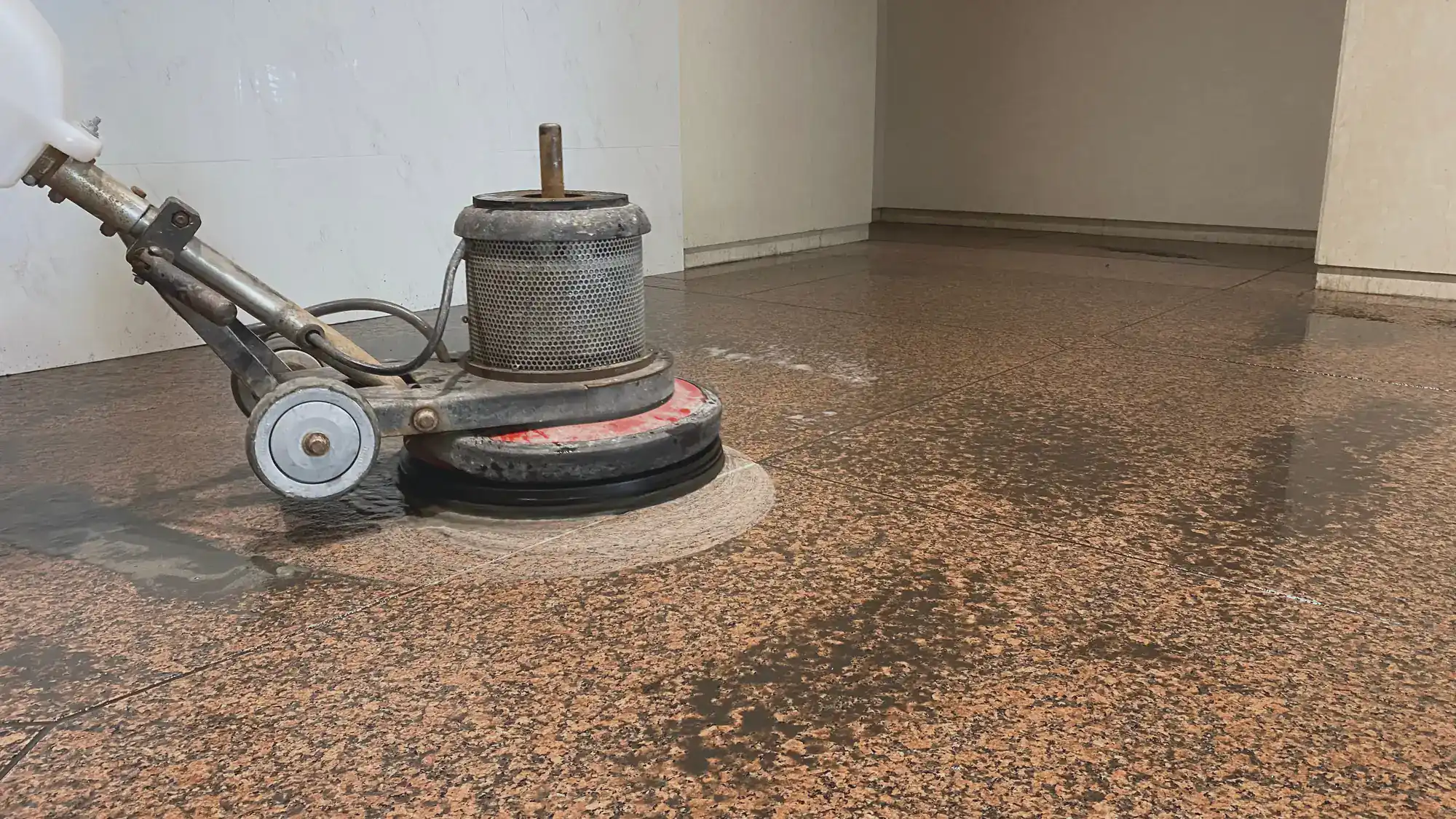
Marble polishing is the process of restoring a glossy, reflective surface to stone that has lost its shine. It uses progressively finer abrasives, often diamond pads on a heavy rotary machine, to smooth the surface down to the point where it reflects light clearly and shows the stone’s natural veining in sharp, vivid detail. The result is the mirror-like finish most people picture when they think of high-end marble.
What polishing fixes is surface-level loss of gloss, the kind that happens gradually over time through foot traffic, light contact, and the slow accumulation of micro-abrasions. It also addresses mild etching when the damage has not gone too deep. What it does not fix is structural damage: chips, cracks, deep scratches, or significant etch marks that have eaten into the stone. Those need repair work before polishing begins.
Here is the thing most marble owners do not find out until they have already spent money on cleaning products: if your marble looks dull, hazy, or cloudy, there is a very good chance it has been etched, not dirtied. And those are two completely different problems.
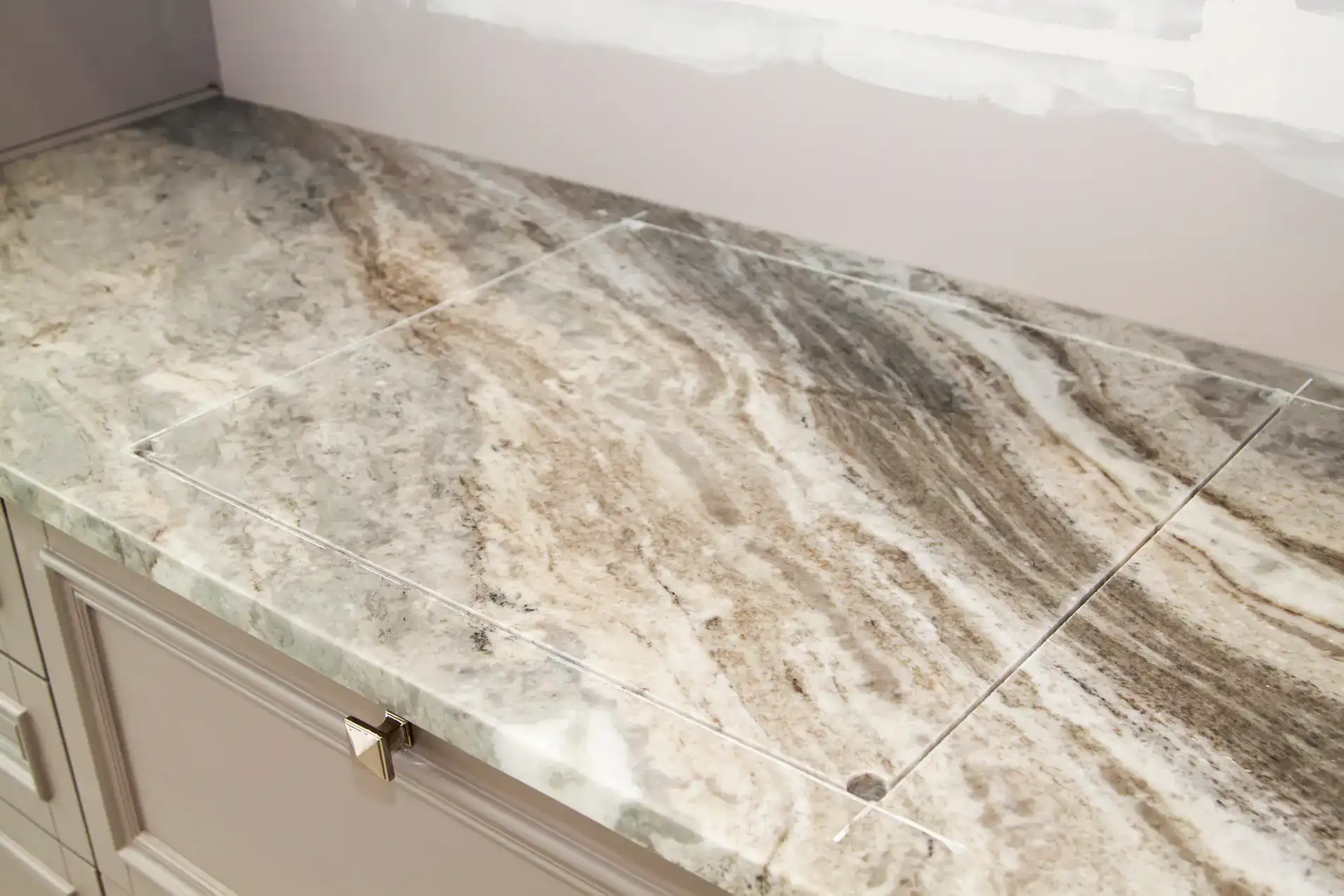
Marble is made of calcium carbonate. That means anything acidic will react with the surface on contact and chemically eat into the stone. Wine, lemon juice, vinegar, coffee, tomato sauce, even some cleaning products that are marketed as safe, can etch marble almost immediately. The result looks like a dull patch, a water ring, or a cloudy film. It is easy to mistake for a stain or residue. But it is not sitting on top of the surface. It is damage to the surface itself.
No amount of cleaning removes an etch. You can scrub it, buff it with a cloth, apply every stone-safe product on the market, and the dullness will still be there. That is because you are not dealing with dirt, you are dealing with a chemical reaction that has physically altered the stone. The only way to address it is mechanically, by grinding and resurfacing the damaged layer.
This is where the confusion between polishing and honing becomes important. Light etching on a polished marble surface can often be addressed with polishing alone, restoring the gloss and blending the damaged area back into the surrounding stone. But heavier etching, or etching on a honed surface, typically requires honing first to level the damage before any finishing work can happen. Skipping that step and going straight to polish does not just fail to fix the problem, it can make the surface look uneven and inconsistent.
A professional assessment matters before any work begins. The treatment depends entirely on the type of damage, the current finish, and how deep the etching or wear has gone. Getting that wrong does not just waste money, it can permanently alter a finish that would have been straightforward to restore.
Honing is what happens before polishing. Technically, all polished marble starts as honed marble, the polishing process is simply the continuation of honing with finer and finer abrasives until the surface becomes reflective. When a stone is deliberately left at the honing stage, the result is a smooth, matte finish that looks soft and understated rather than glossy and reflective.
Honed marble does not show etch marks as readily as polished marble, because the surface is not reflective enough to make them visible. That is a meaningful advantage in high-traffic areas, kitchen floors, mudrooms, hallways, busy bathrooms, where acidic contact is frequent and unavoidable. It is also why honed marble has become a popular choice in family homes across Nassau County and Suffolk County, where the finish needs to hold up to daily life without looking damaged after every dinner party.
The trade-off is that honed marble is slightly more porous than polished marble, which means it can absorb oils and liquids more readily. It typically needs sealing every three to six months to stay protected. Polished marble’s denser surface is somewhat less absorbent, so it may need sealing a little less frequently, though both finishes absolutely need to be sealed.
One question we hear often from homeowners across Long Island is if they can switch finishes, going from honed to polished, or polished to honed. The answer is yes, and it is more common than most people realize. Plenty of homeowners choose a honed finish during a renovation and later decide they want the drama of a polished surface, or vice versa. Converting between finishes is entirely achievable with professional marble restoration work. It is not a permanent decision.
What matters is understanding which finish is right for how you use the space, and then making sure the restoration work is done correctly so the result lasts.
Marble care is not one-size-fits-all, and the context you are working in shapes what the right approach looks like. A polished marble floor in a pre-war Manhattan co-op on the Upper East Side has different needs than a honed countertop in a Hamptons kitchen that gets heavy seasonal use. The material is the same, but the environment, the use patterns, and even the building logistics are different.
We have been doing this work across Manhattan, Nassau County, Suffolk County, and Long Island for nearly 15 years. That experience matters, not just for knowing how to treat the stone, but for understanding the practical realities of the markets we serve.
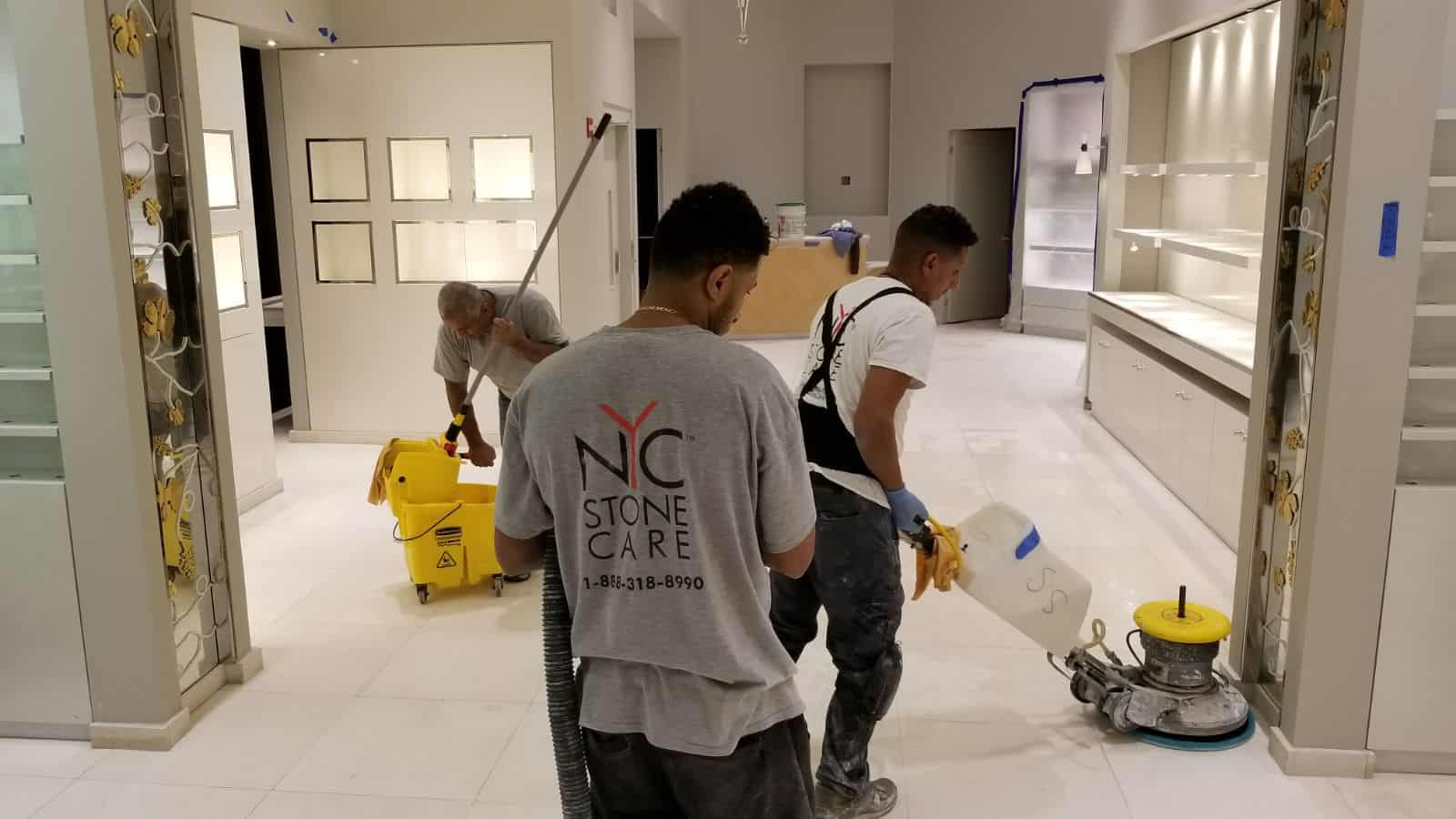
Manhattan presents a specific set of conditions that affect marble care in ways that do not come up in other markets. Pre-war buildings on Park Avenue, Central Park West, and Fifth Avenue often have original marble installations, lobby floors, foyer tile, bathroom vanities, that are decades old and have been through multiple rounds of improper cleaning, amateur polishing attempts, and general wear. Restoring that marble requires understanding both the material and the history of what has been done to it.
There is also the building access question. Co-op and condo boards in Manhattan have strict requirements for contractors working in their buildings, Certificates of Insurance, freight elevator scheduling, work-hour restrictions. We are fully licensed and insured, and we handle the documentation that building boards require. That is not a small thing when you are trying to coordinate a restoration project in a building with a managing agent and a board approval process.
The practical reality of working in Manhattan apartments also means dust control and protection of surrounding spaces matter enormously. Professional marble polishing and honing use wet-polishing techniques and HEPA filtration to keep stone dust contained during the process, critical when your neighbors are on the other side of a shared wall and your furniture, artwork, and finishes are in the same room.
The most common call we get from Manhattan clients is some version of: “My marble looked fine and now it does not, and I do not know what happened.” Usually what happened is acid contact, a wine spill that was not wiped up immediately, a cleaning product that reacted with the stone, or years of lemon-scented dish soap near a kitchen sink. The fix is almost always achievable. The key is diagnosing it correctly first.
Long Island’s coastal environment introduces factors that do not apply in the same way to inland markets. Homes along Nassau County’s South Shore, Long Beach, Atlantic Beach, Lido Beach, and throughout Suffolk County’s East End deal with higher ambient humidity and salt-laden air year-round. Both of those conditions accelerate the breakdown of stone sealers, which means marble in these homes needs maintenance attention more frequently than the same installation in a drier, more temperate environment.
For Hamptons homeowners in East Hampton, Southampton, and Bridgehampton, there is an additional seasonal dimension. Many of these properties sit empty or lightly used for months at a time, then see heavy use during the summer. That pattern, combined with the entertaining that comes with it, means marble surfaces in kitchens, outdoor-adjacent areas, and high-traffic entertaining spaces often come out of the summer season showing concentrated etch damage from wine, citrus, and food contact. Scheduling marble restoration in the fall, after the season ends, or in the spring before it begins, makes practical sense.
Nassau County’s Gold Coast communities, Manhasset, Roslyn, Oyster Bay, and the Five Towns area have some of the highest concentrations of luxury residential marble on Long Island. Many of these homes have original marble installations in foyers, bathrooms, and kitchens that have not been professionally restored in years, or have been cleaned with the wrong products and show it. The damage is usually fixable. The question is if it gets addressed with the right treatment or the wrong one.
For older homes throughout Nassau County and Suffolk County, particularly the mid-century colonials and estate properties that make up much of the area’s housing stock, original marble installations often require a careful approach that accounts for the age of the stone and the history of what has been done to it. That is exactly the kind of work that benefits from experience rather than a generic restoration process.
If your marble looks dull, hazy, or scratched, the first step is not picking a service, it is understanding what is wrong. Etch damage, surface wear, deep scratches, and finish degradation all look similar to the untrained eye, but they call for different treatments. Choosing the wrong one does not just fail to fix the problem, it can change your finish permanently or make the damage harder to address later.
The good news is that most marble damage, even damage that looks severe, is restorable. You rarely need to replace stone that has been professionally assessed and treated correctly. What you do need is someone who will look at the condition of your marble before recommending anything. If you are in Manhattan, Nassau County, Suffolk County, or anywhere on Long Island and you are not sure what your marble needs, reach out to NYC Stone Care. We will take a look, give you a straight answer, and handle the work the right way.
Article details:
Share:
Continue learning: